
Is Lion Sands Game Reserve Worth It? What to Know Before You Book

March 23, 2026
Four lodges. One river. One of Africa's finest leopard territories.
Lion Sands Game Reserve is a private safari reserve in the Greater Kruger ecosystem - and one of the few places where consistent leopard sightings, a perennial river system and four distinct lodge experiences come together in a single reserve.
It is best suited to travellers looking for a high-probability Big Five safari, particularly those wanting to see leopard behaviour up close, without compromising on lodge choice or exclusivity.
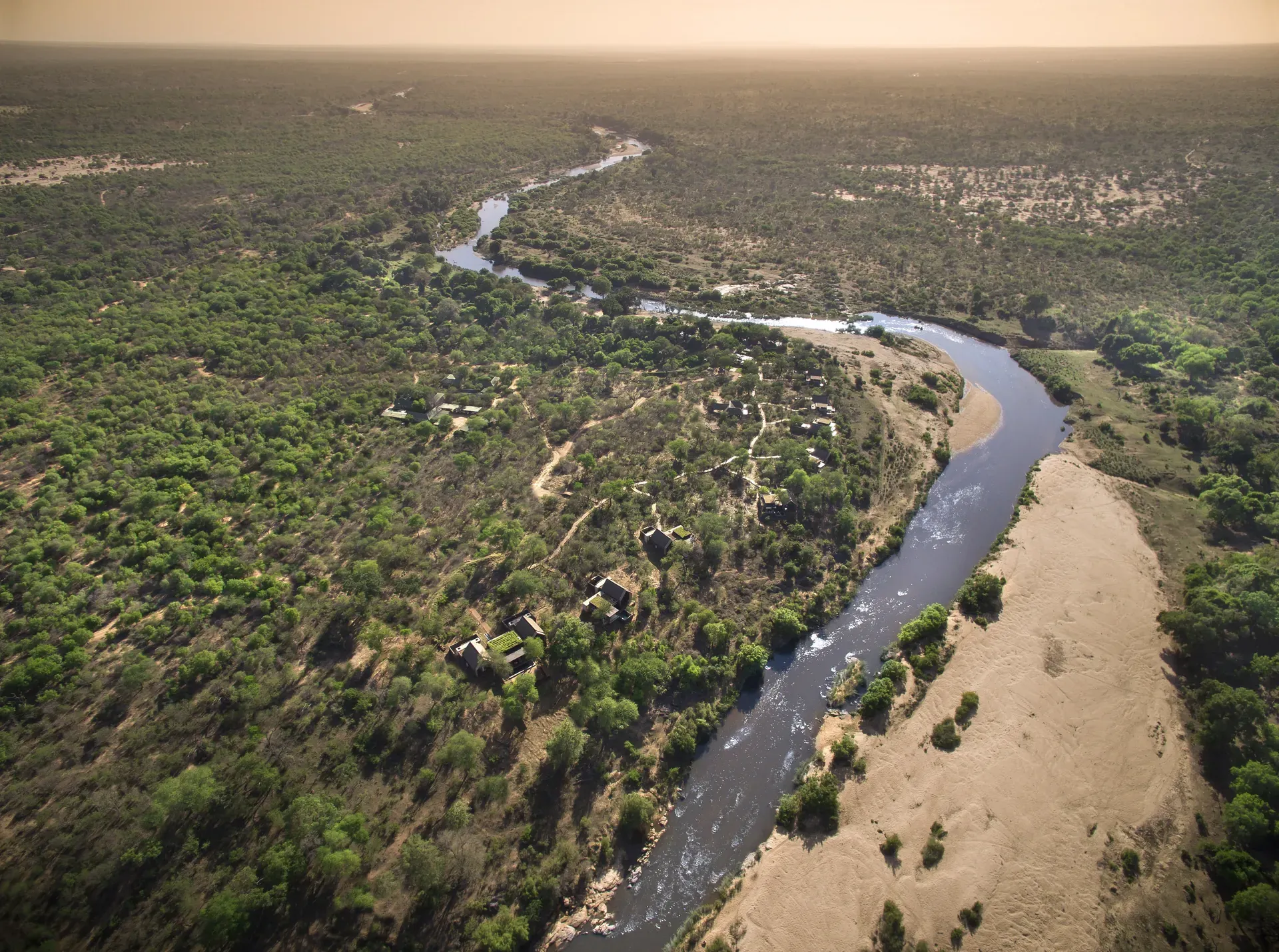
What sets Lion Sands Game Reserve apart is its position across both the Sabi Sand Nature Reserve and Kruger National Park, combined with 10.5 kilometres of Sabie River frontage - a year-round water source that shapes wildlife movement and drives sightings.
Lion Sands is among the most reliable safari reserves in the Greater Kruger for consistent wildlife sightings, particularly leopard.
What Is Lion Sands Game Reserve?
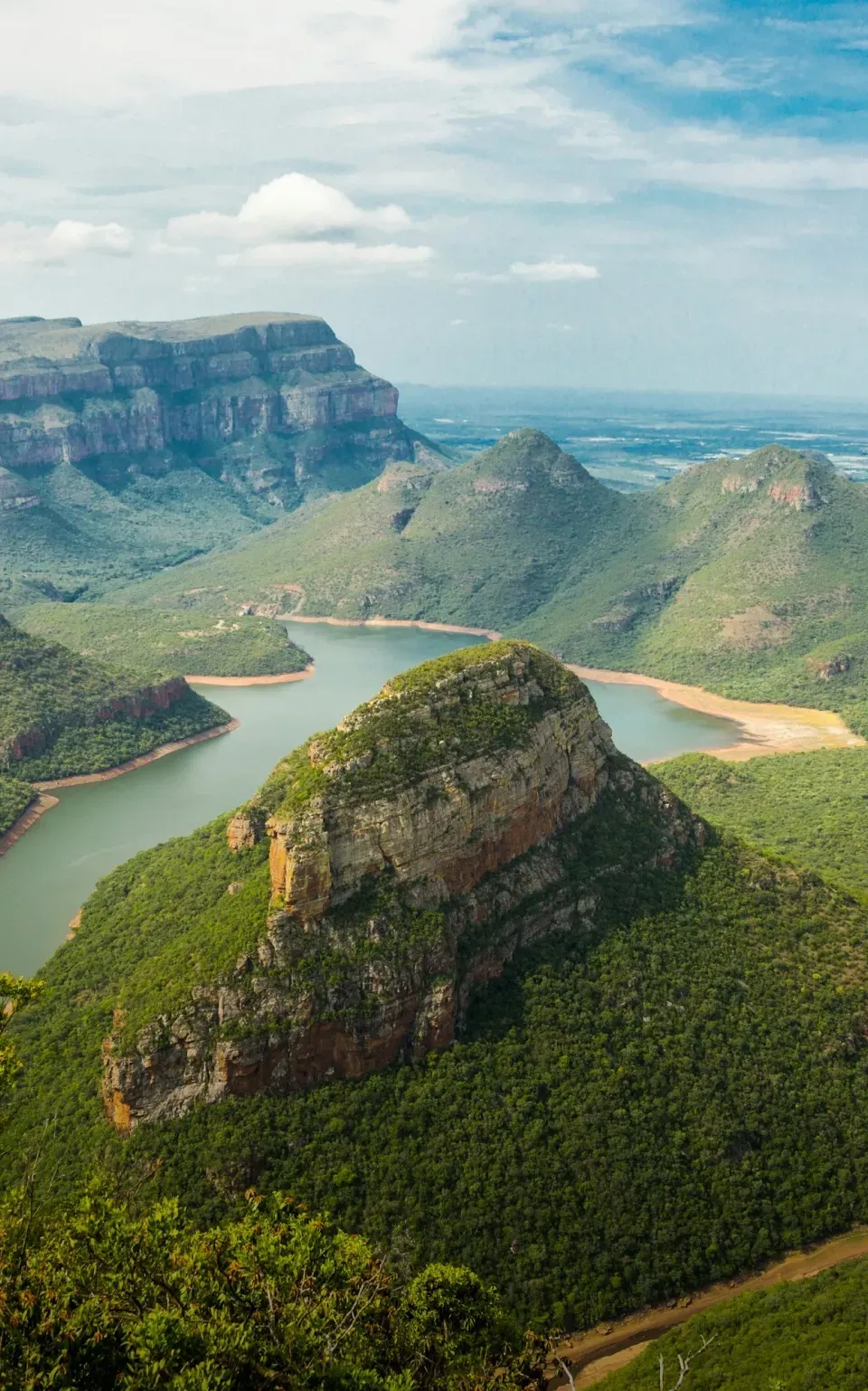
Lion Sands Game Reserve is part of MORE Collection, a fourth-generation family business with roots in this landscape going back to 1933. Four generations later, the family remains custodian of the same land. The reserve conserves 30 600 acres (12 400 hectares) of habitat supporting 150 mammal species and more than 500 bird varieties. Lion Sands holds 6.5 miles (10.5 kilometres) of exclusive frontage on the Sabie River - one of the longest stretches of private river frontage in the ecosystem.
Where Is Lion Sands Located?
Lion Sands is the only private reserve that spans both the Sabi Sand Nature Reserve - commonly searched as Sabi Sands - and Kruger National Park, in Mpumalanga Province, northeastern South Africa. It is approximately 7 miles (12 km) from Skukuza Airport and roughly five to six hours by road from Johannesburg. Because no fence separates the two areas, wildlife moves freely across the landscape - the animals guests encounter at Lion Sands are part of a much larger, open ecosystem.
What Makes Lion Sands Different?
What distinguishes Lion Sands is how its location, river system and guiding approach combine to produce consistently strong wildlife sightings:
- The only private reserve spanning both the Sabi Sand Nature Reserve and Kruger National Park
- 6.5 miles (10.5 km) of exclusive Sabie River frontage
- Four distinct lodges within one continuous private reserve - one wildlife experience, four atmospheres
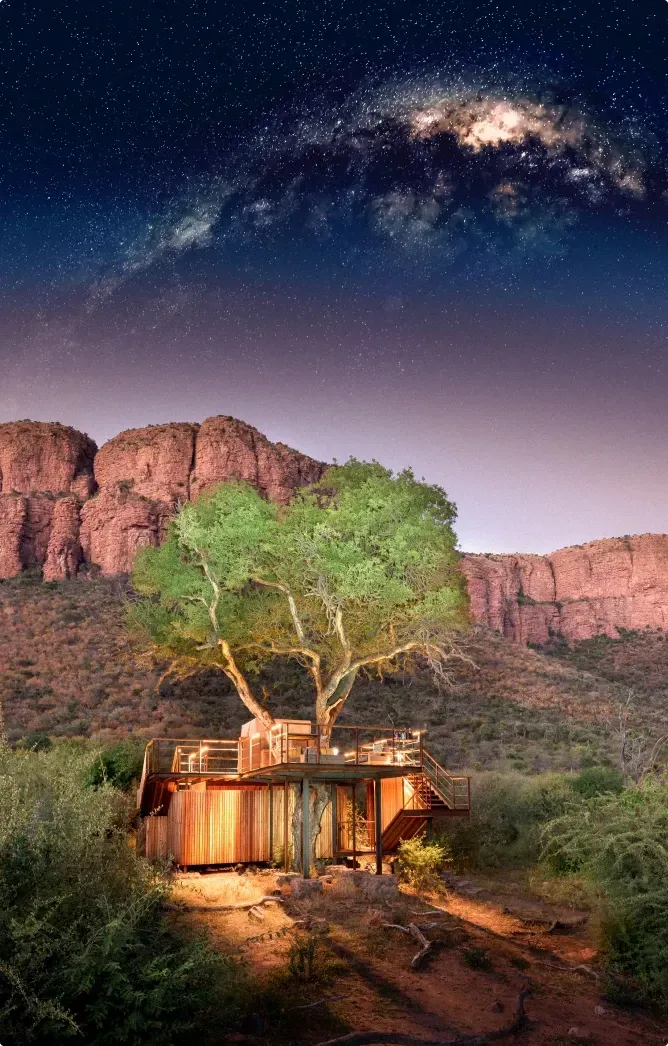
- Three open-air Treehouses: Chalkley, Kingston and Tinyeleti
- Creative Lab for photography at River Lodge and Tinga Lodge - expert guidance, professional equipment rental, on-site printing and photo shoots
- Artist Residency programme in partnership with the South African Foundation for Contemporary Art, at Ivory Lodge and Narina Lodge
- Spa and wellness facilities available at all four lodges
- Ivory Lodge holds 5 Star Premium status - one of only eleven properties in South Africa to do so
Who is Lion Sands Right For?
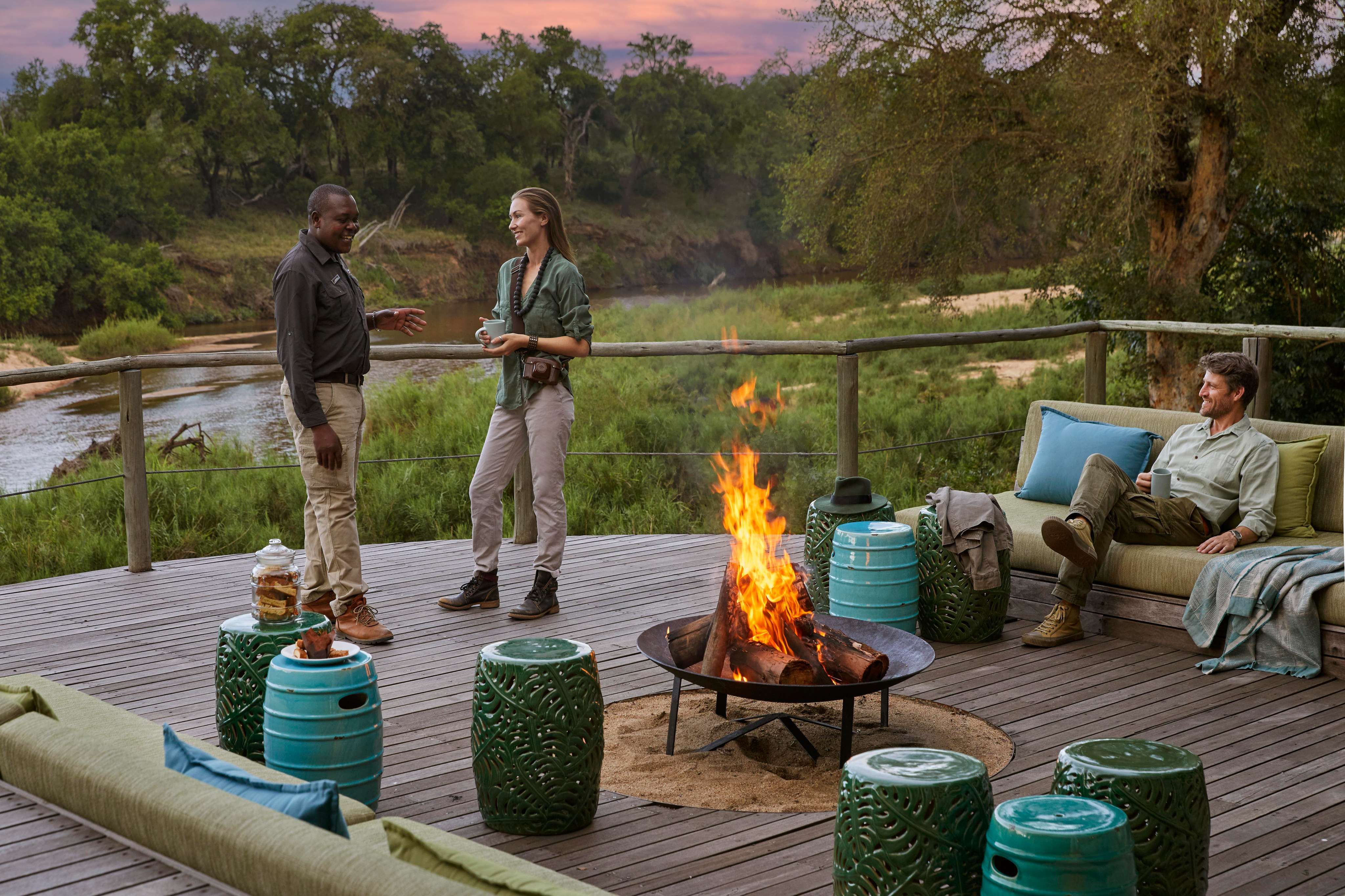
If you're visiting for the first time, understanding how the experience is structured can make a significant difference — especially when choosing the right lodge.
- First-time safari travellers wanting reliable Big Five and leopard sightings in one of Africa's most established private reserves
- Returning safari guests - the treehouse experience, Artist Residency and Creative Lab offer something beyond the game drive
- Couples seeking an exclusive, immersive bush experience - Narina Lodge or Ivory Lodge in particular
- Families with children - Tinga Lodge from age six, River Lodge from age ten, both Hinkwenu Villa and Fish Eagle Villa from all ages
- Wildlife photographers wanting professional equipment, expert guidance and on-site printing through the Creative Lab at River Lodge and Tinga Lodge
- Travellers interested in art alongside safari - the Artist Residency programme at Ivory Lodge and Narina Lodge brings working artists into the reserve
The Four Lodges at Lion Sands
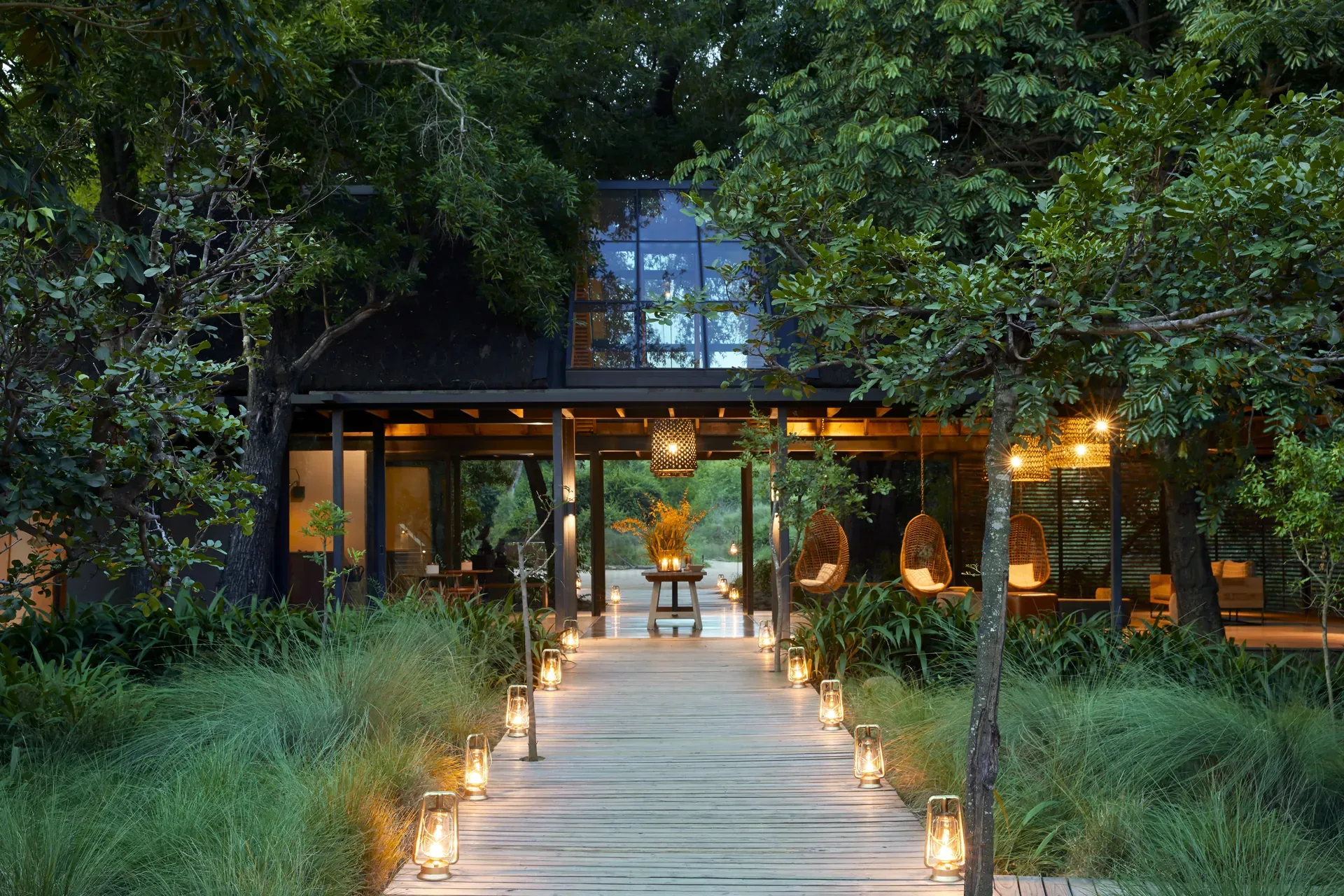
The choice of lodge is less about location - all share the same reserve - and more about atmosphere and style of stay. It’s one reserve, experienced in four different ways.
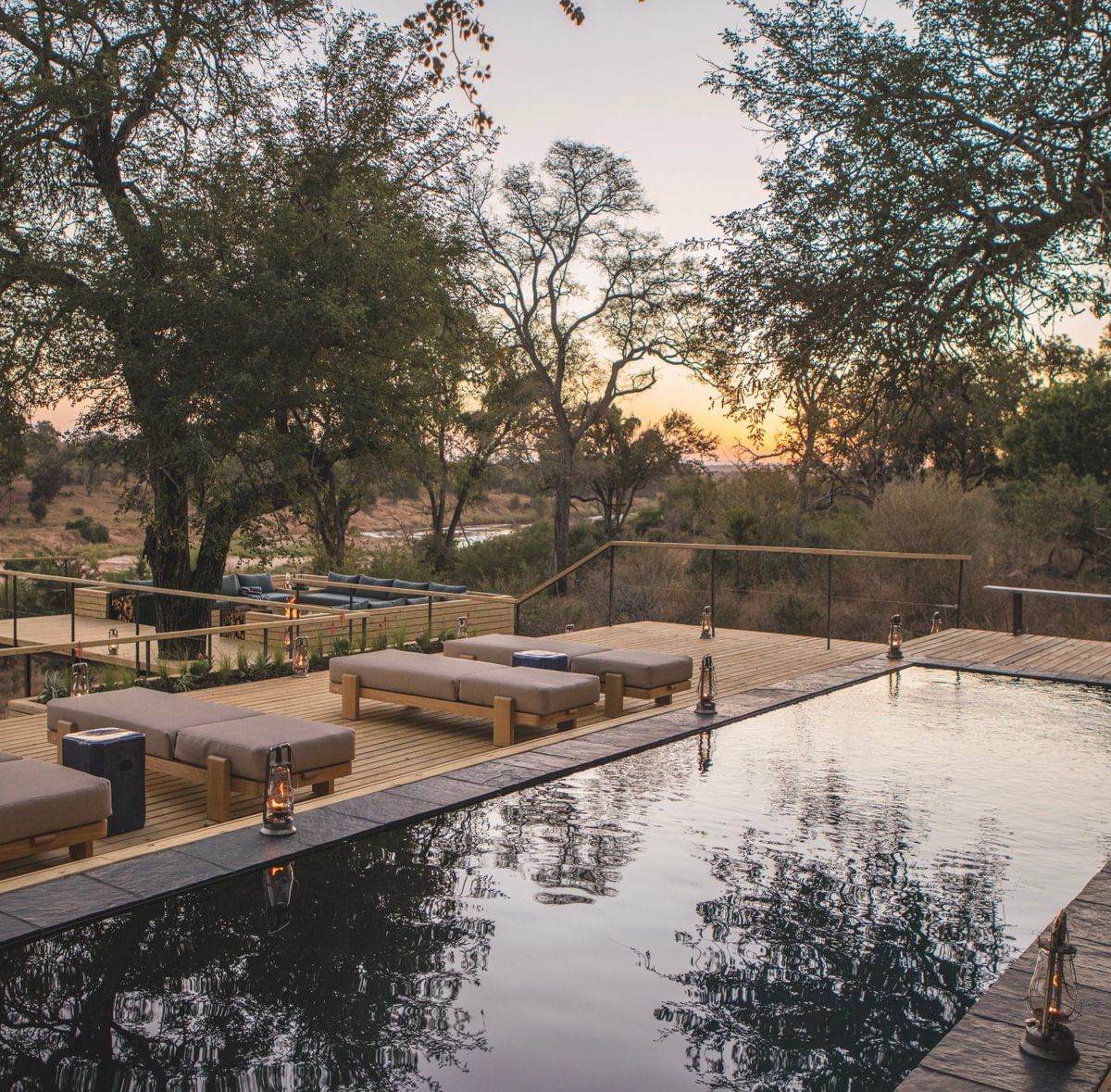
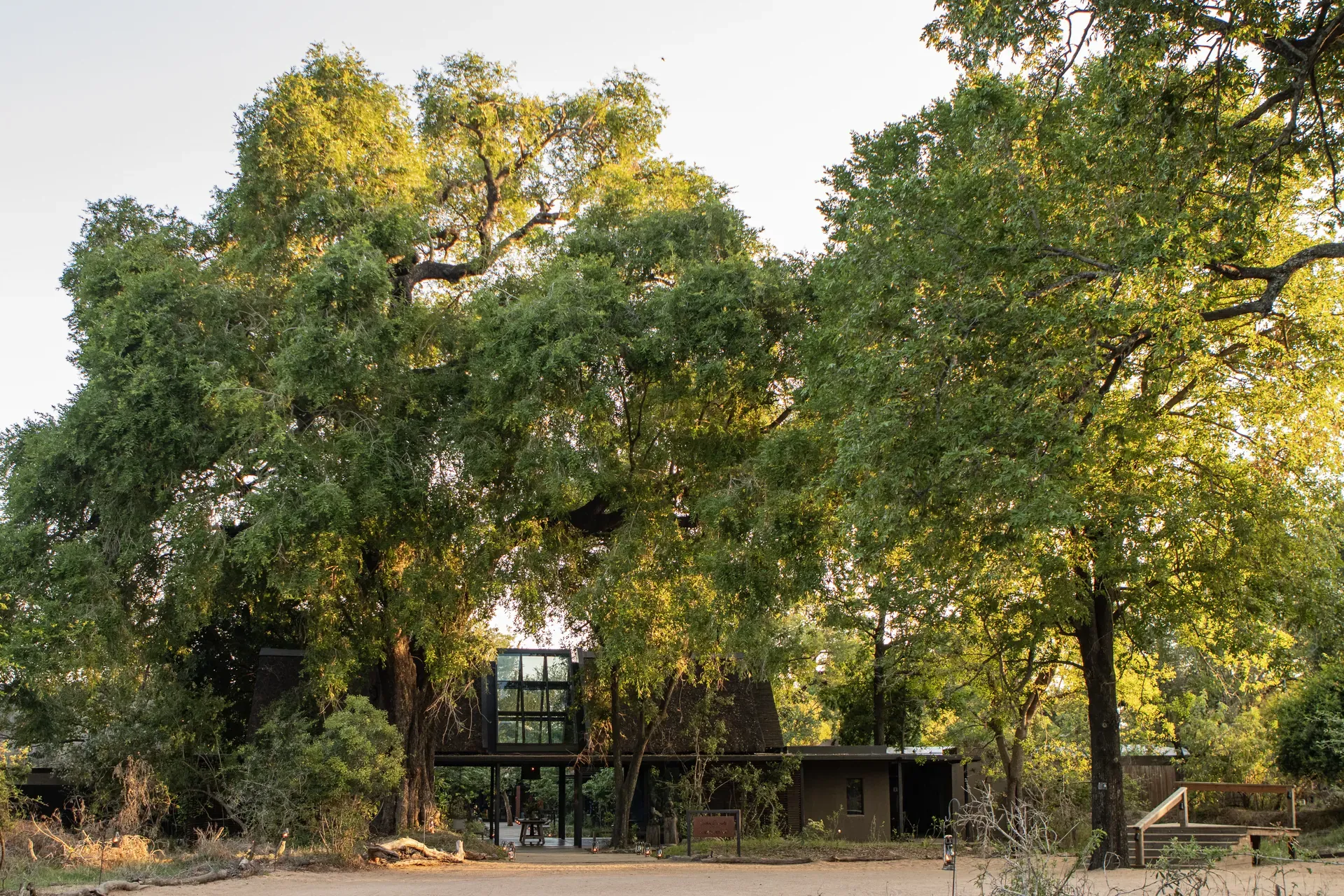
Eight suites - the largest one-bedroom suites in the Sabi Sand - each with a private terrace, plunge pool and floor-to-ceiling windows facing the Sabie River. Ivory Lodge holds 5 Star Premium status and is home to the Artist Residency Programme, Botanical House, Larder and Wine Room. A dedicated kosher kitchen approved by the Beth Din of Johannesburg.
Eighteen rooms across three categories including inter-leading family rooms, a two-bedroom Family River Suite and the most social atmosphere of the four lodges. The Creative Lab is available to all guests. Kosher catering available with advance notice. The lodge welcomes children from age ten.
Nine stilted suites in a 100-year-old tree canopy directly above the Sabie River, each with a private plunge pool and panoramic river views. Adults-focused, with a minimum age of sixteen. The Artist Residency Programme is available, bringing artists into the wilderness to create and exhibit work inspired by the reserve.
Classic safari design with a heritage atmosphere rooted in the lodge's origins as a former field guide's home. Home to the Mack & Madi Kids' Adventure programme at the Owl House, welcoming children from age six. The Creative Lab is available for novice and professional wildlife photographers.
Each lodge offers a different way to experience Lion Sands - if you’re still deciding, here’s a more detailed guide to how they compare.
What Animals Can You See at Lion Sands Game Reserve?
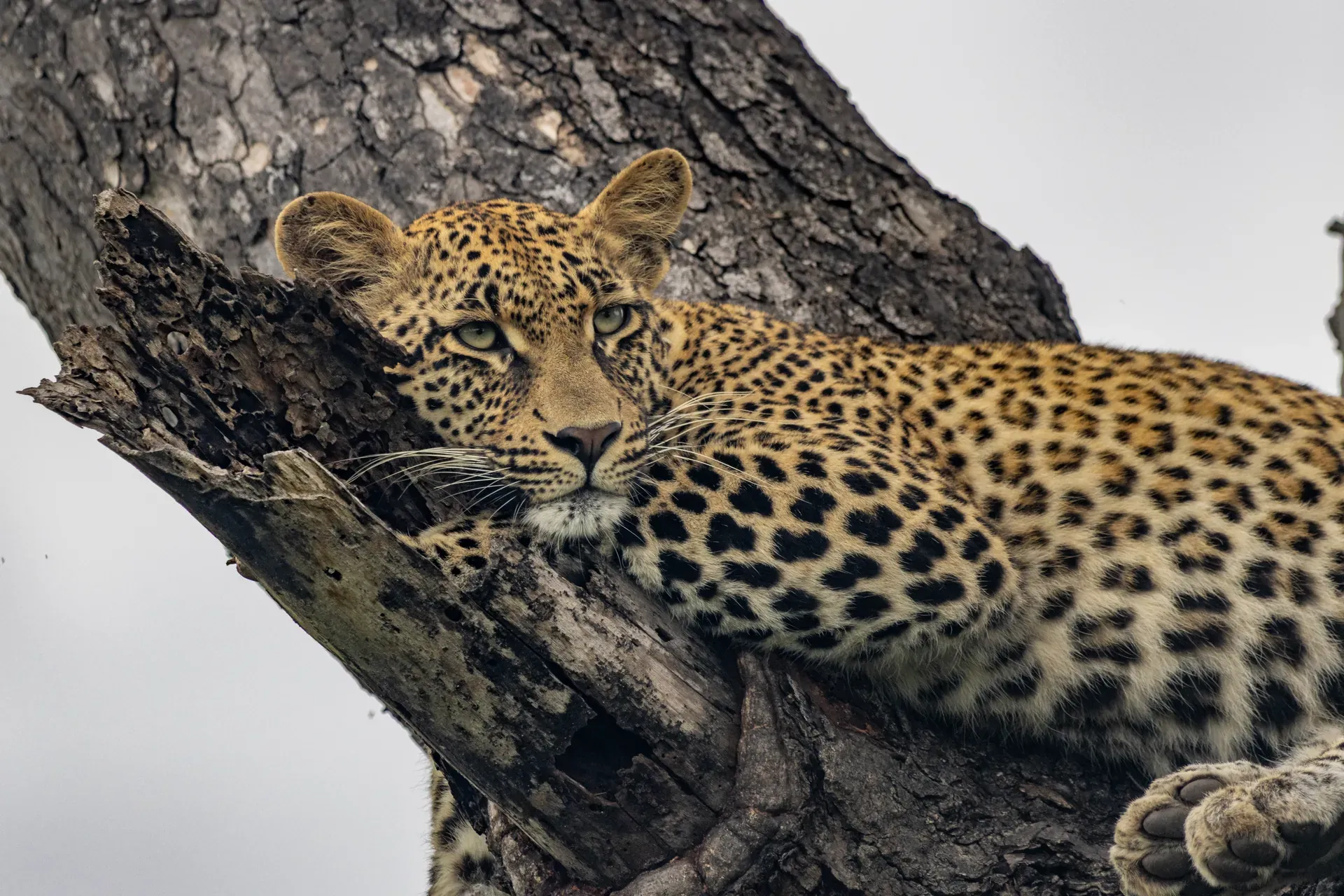
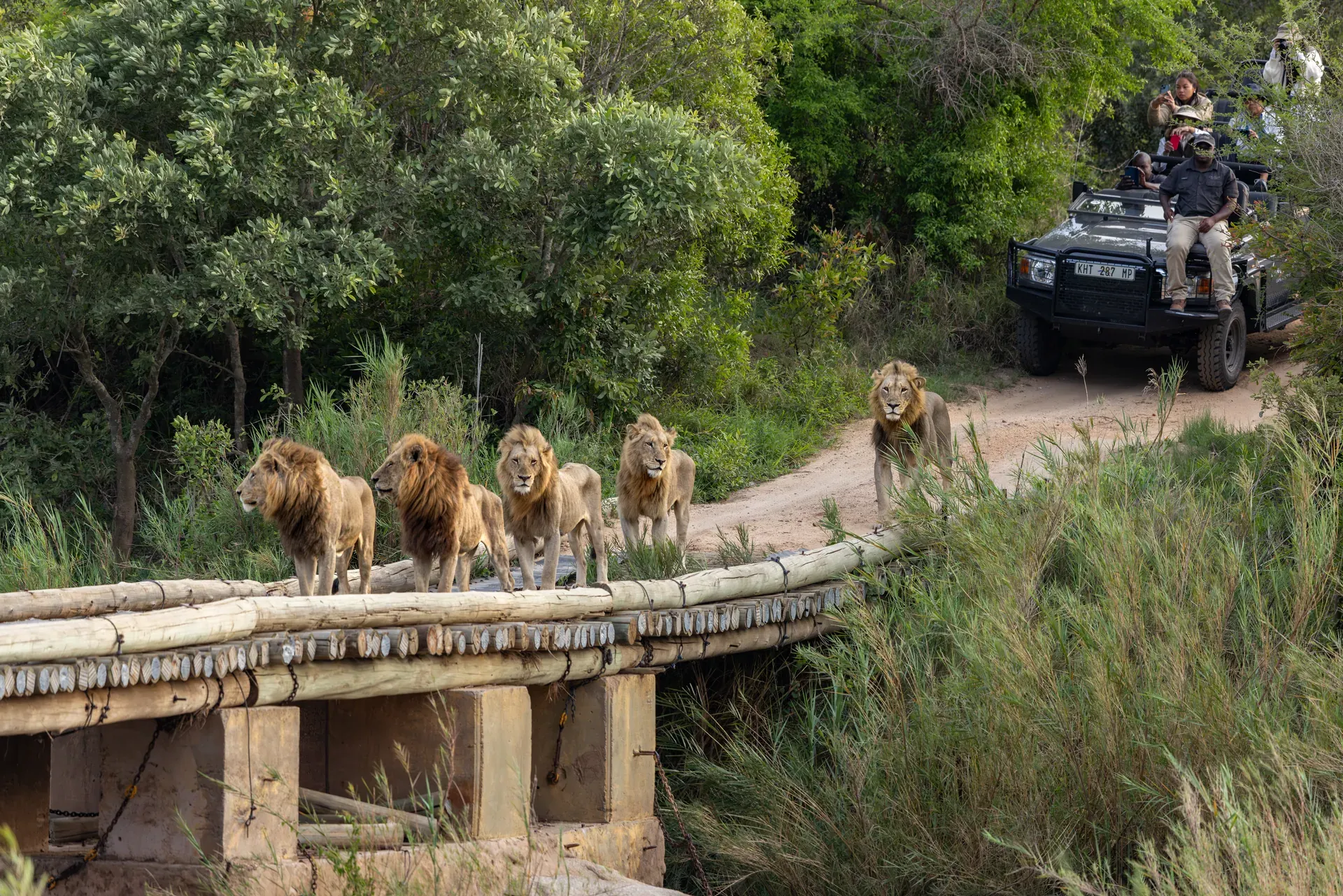
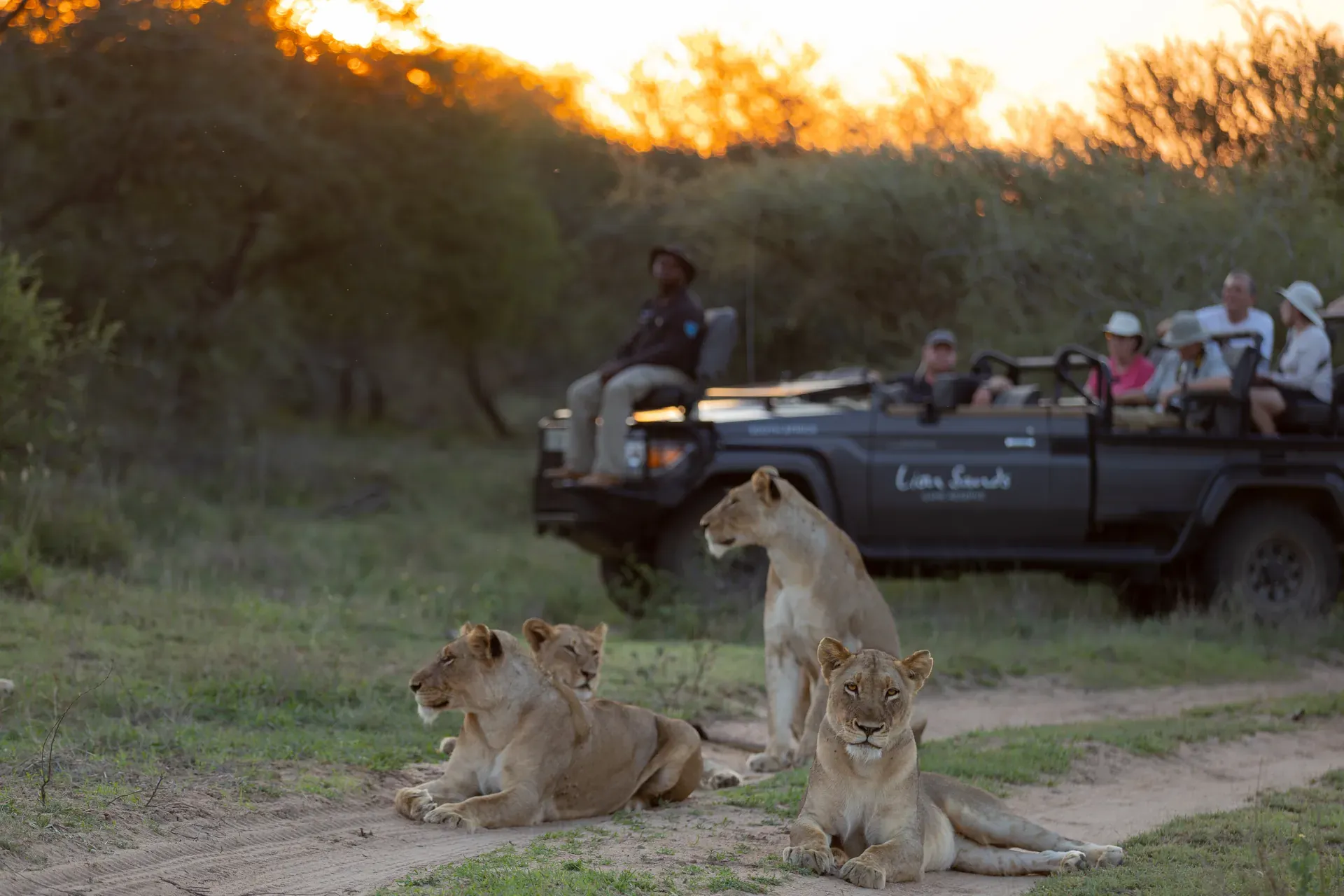
Lion Sands is best known for its leopard sightings, supported by a high-density prey base and experienced tracker-field guide teams - a combination of factors that explains why sightings are so consistent across the reserve. This is explored in more detail in why leopard sightings are so strong at Lion Sands.
As a Big Five reserve within the Greater Kruger ecosystem, guests can expect to encounter:
• Lion
• Leopard
• Elephant
• Rhino
• Buffalo
Sightings are shaped by more than luck - the river system, prey density and experienced tracker–field guide teams all increase the likelihood of meaningful encounters.
Beyond the Big Five, the reserve supports cheetah, spotted hyena, giraffe, zebra, warthog, wild dog, and a range of antelope species including impala, kudu and nyala. More than 500 bird species have been recorded across the ecosystem - the best birdwatching months are October to April, when migratory species arrive. The Sabie River supports hippo and Nile crocodile year-round.
Because Lion Sands is part of an open, unfenced system, wildlife populations fluctuate naturally with the seasons and move across a much larger landscape. This means sightings are shaped by genuine ecological movement - no two drives are identical.
This combination of habitat, prey density and tracking expertise is what makes sightings at Lion Sands consistently strong compared to many other safari destinations.
The Sabie River and Its Role in the Ecosystem
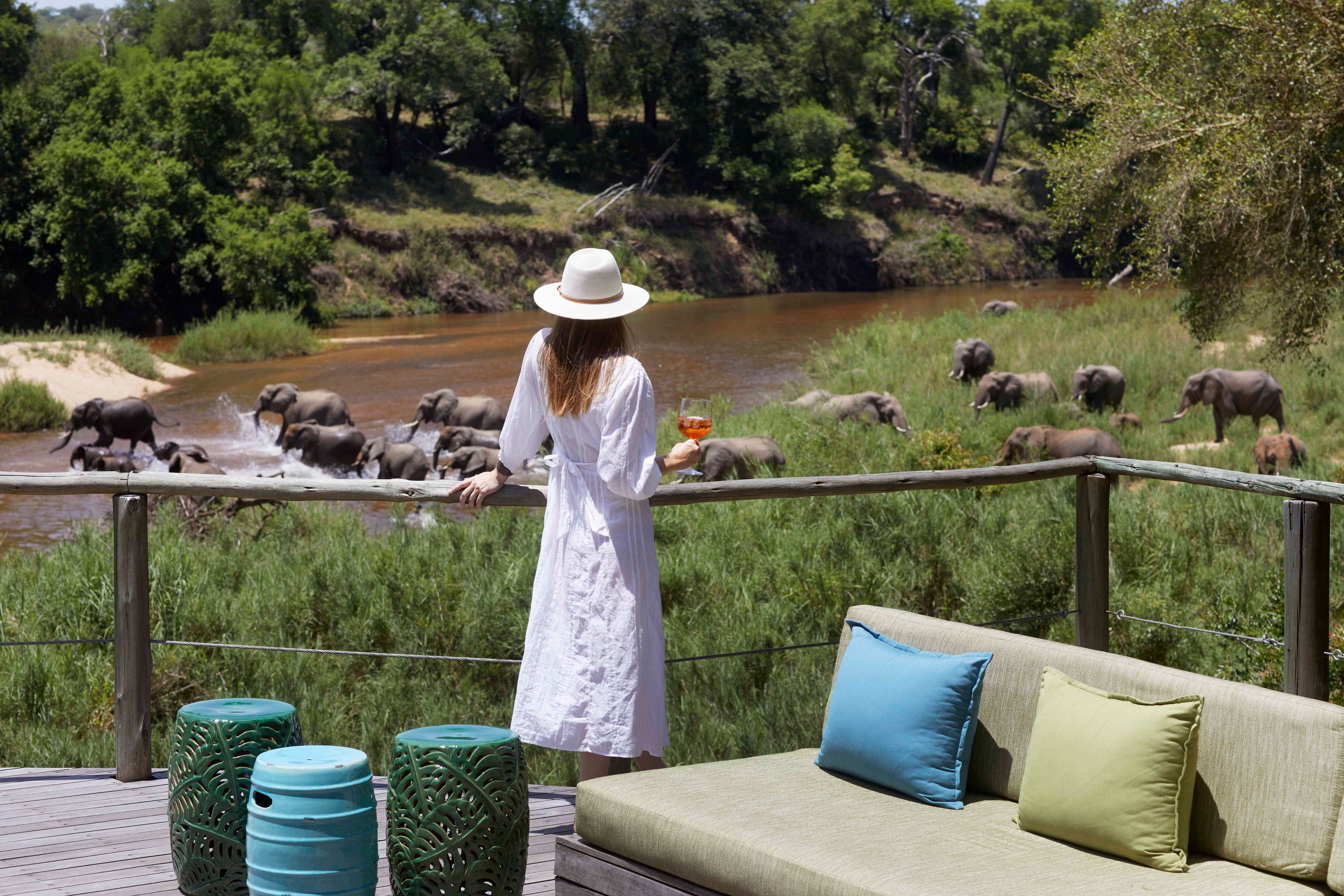
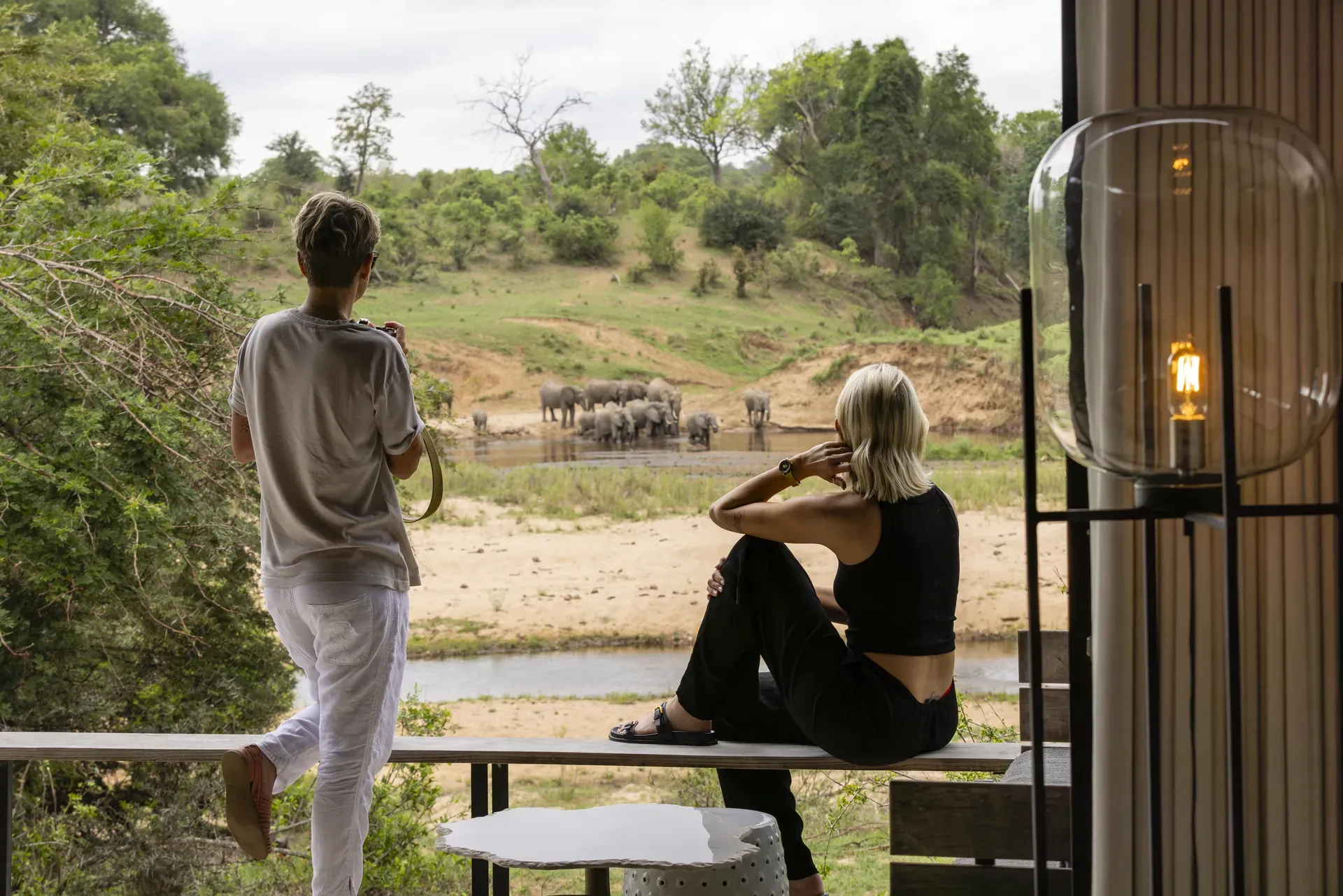
The Sabie River is one of the main reasons Lion Sands delivers consistently strong wildlife sightings, particularly during the dry season. As one of the few perennial rivers in the Greater Kruger ecosystem, it draws wildlife consistently to its banks throughout the year - a dynamic explored in more detail in how the Sabie River shapes wildlife at Lion Sands Game Reserve. Where most watercourses dry up through the winter months, the Sabie flows year-round - drawing wildlife consistently to its banks and making Lion Sands' 6.5 miles (10.5 kilometres) of exclusive river frontage one of the reserve's defining features. During the dry season especially, when other water sources across the ecosystem disappear, the Sabie River becomes the focal point for predators, plains game, elephants and waterbirds. The river creates a varied landscape of riverine forest, shaded woodland, exposed sandbanks and floodplain grassland - each supporting different species and providing exceptional biodiversity within a concentrated area. All four lodges face the Sabie River, with private decks and suite views oriented towards the water. Wildlife and birdlife move along the banks as a constant backdrop.
For leopard specifically, the reedbeds and riverine thickets along the Sabie River provide prime habitat for bushbuck, nyala and common duiker - small to medium antelope that feature prominently in a leopard’s diet. Where prey concentrates, predators follow.
This is what underpins Lion Sands’ reputation: not a single feature, but a system - water, habitat and tracking expertise working together to produce consistently strong sightings.
This system is most visible in one area in particular: leopard sightings. While Lion Sands offers a complete Big Five safari, its location within the Sabi Sand places it in one of the most established leopard habitats in Africa.
Why Leopard Sightings are so Strong at Lion Sands
Leopard sightings are a defining part of the Sabi Sand, and Lion Sands sits within one of the region’s most established leopard territories.
Habitat and prey availability
The terrain across the Sabi Sand supports one of the strongest leopard populations in Africa. Dense thickets, rocky outcrops and riverine habitat create ideal conditions for denning, hunting and raising cubs, while a high density of prey ensures a consistent food source throughout the year.
Long-term, ethical habituation
Some of the older reserves in the Sabi Sand pioneered ethical leopard habituation over multiple generations. Through consistent, non-intrusive vehicle presence, leopards have become accustomed to safari vehicles without altering their natural behaviour.
Tracking expertise
Tracking a leopard is less about following clear footprints and more about understanding behaviour and reading subtle environmental cues. Trackers interpret alarm calls, scent and animal behaviour to build a picture of where a leopard is moving.
What Does Lion Sands Cost?
Lion Sands sits at the upper end of the Sabi Sand market, with pricing driven by its location, field guiding standards and consistently strong wildlife sightings. Rates vary by lodge and season, with the dry season (June to September) commanding higher rates than the green or shoulder season months. River Lodge from $1 600 per person per night sharing; Narina Lodge and Tinga Lodge from $1 800; Ivory Lodge from $2 700. Lodge rates include accommodation, meals, twice-daily game drives, bush walks, game drive refreshments, local beverages and transfer from Skukuza Airport. The private villas are priced on an exclusive-use basis - Hinkwenu Villa from $9 600 per night, Fish Eagle Villa from $14 900 per night. Villa rates include accommodation, villa concierge, villa team, all meals, stocked pantry, local beverages, twice-daily game drives in a private safari vehicle with a field guide and tracker team, bush walks, game drive refreshments, transfer from Skukuza Airport, laundry, wellness treatments, kids’ activities, childminding, and gratuities. Lion Sands is best experienced as part of a broader Southern African journey. Contact our MORE Collection Journeys team to design a tailored itinerary around your stay.
What Your Stay Looks Like at Lion Sands
Beyond the lodges themselves, Lion Sands offers a number of distinct ways to experience the reserve - from exclusive-use villas to overnight treehouse stays.
Private Villas
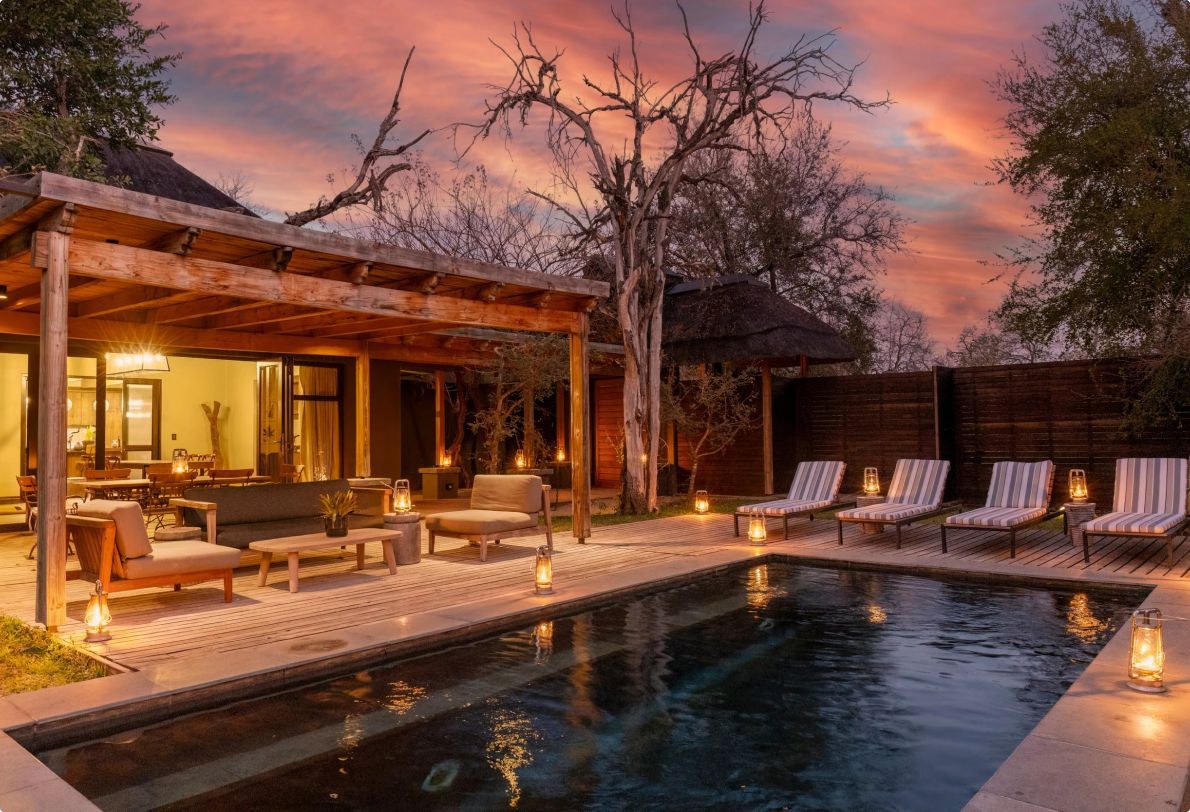
Lion Sands has two exclusive-use private villas for guests seeking a fully self-contained safari home. Fish Eagle Villa at Ivory Lodge offers three bedrooms accommodating up to 8 guests (6 adults, 2 children); Hinkwenu Villa at Tinga Lodge offers two bedrooms accommodating up to 6 guests (4 adults, 2 children). Both include a private pool, dedicated field guide team and safari vehicle, a personal chef and the Mack & Madi Kids’ Adventure programme. Both suit families or small groups wanting complete exclusivity within the reserve.
The Treehouse Experience
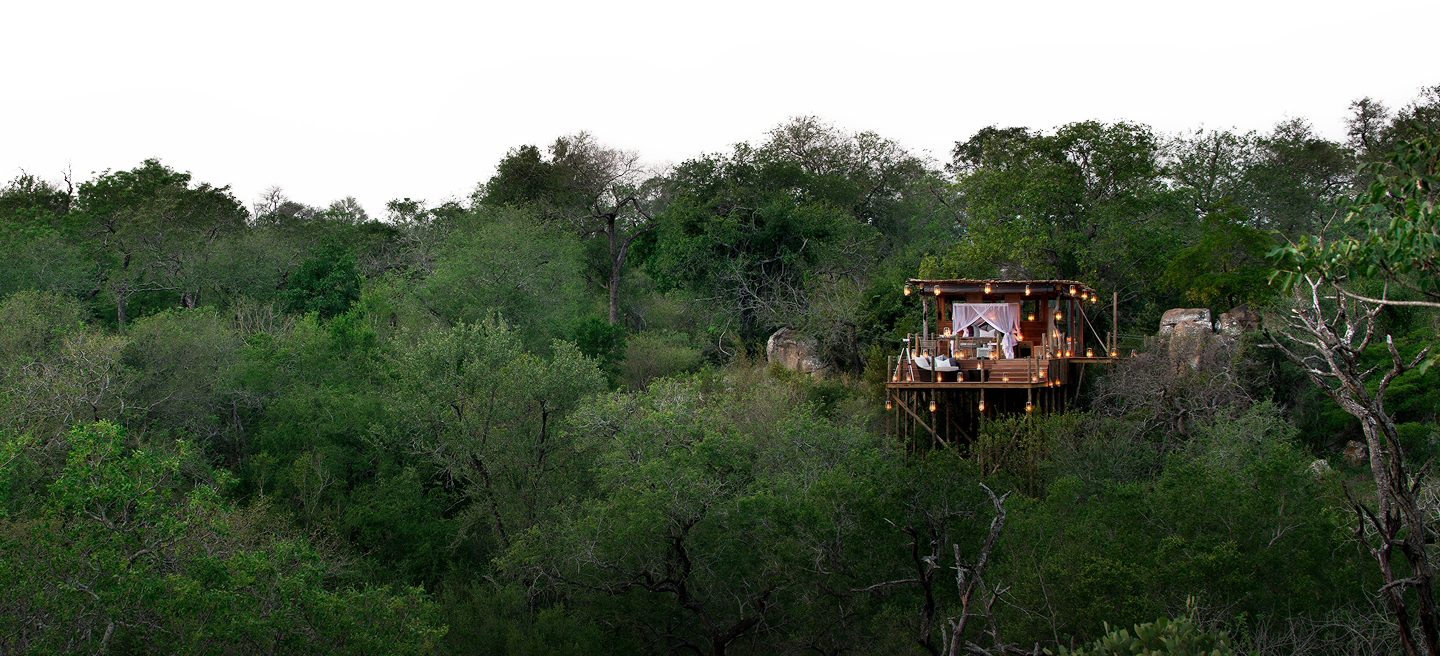
For something entirely different from a traditional lodge stay, Lion Sands offers the option to sleep out in one of its remote treehouses - a private, open-air experience that shifts the rhythm of a safari completely.
Lion Sands has three treehouses - Chalkley, Kingston and Tinyeleti - each with a distinct position and character across the reserve. You can explore what this experience is like in more detail in sleeping in a treehouse on safari at Lion Sands.
Guests arrive at sunset for sundowners, followed by a lantern-lit gourmet picnic dinner on the deck. The bush is immediately present, with wildlife moving freely below the platform through the night. Distant lion calls, the bark of a bushbuck, owls, rustling leaves – the sounds carry clearly in the cool air. At sunrise a field guide collects guests. Each treehouse has bathroom facilities with hot running water. A field guide is always available by radio.
The experience is weather-dependent and availability is limited. It is booked in conjunction with lodge accommodation, with the lodge room remaining available to return to at any point.
When Is the Best Time to Visit Lion Sands Game Reserve?
Lion Sands is a year-round safari destination. Wildlife remains present throughout the year - what changes is how you experience it, from open visibility in winter to the layered, more immersive conditions of summer.
June to September: Dry Season
The dry winter months offer the clearest and most trackable safari conditions. Vegetation thins significantly as the bush loses its summer cover, making animals easier to locate. Wildlife concentrates around permanent water - and the Sabie River, which flows year-round, becomes a focal point for game across the ecosystem. Temperatures are cooler and daytime conditions are comfortable. This is the peak period for leopard sightings, with reduced ground cover and easier tracking. Demand is high and advance booking is strongly recommended. October to May: Green Season
The summer months bring dramatic thunderstorms and a rapid transformation of the landscape. The bush becomes lush, migratory birds arrive in significant numbers and the reserve takes on a visually different character from its winter state. Predator activity remains strong during this period, as prey species give birth through the summer months - creating hunting opportunities across the landscape. Green season rates are generally lower, and the reserve is quieter.
Each season offers a different way to experience the reserve -— from visibility and ease of tracking to behaviour, atmosphere, and photographic conditions. For a more detailed breakdown of how the seasons compare, read our full guide on the best time to visit Lion Sands.
Travelling with children
December and January are busy months, coinciding with South African summer holidays and European Christmas breaks. June, July and August see high demand from international visitors during European summer holidays - which align with Lion Sands' dry season. Families should book as far in advance as possible for both periods.
How to Get to Lion Sands
Most guests fly from OR Tambo International Airport in Johannesburg to Skukuza Airport - approximately one hour - with a short road transfer in an open safari vehicle to the lodges. For a full breakdown of routes, flight options and transfer times, see our guide on how to get to Lion Sands Game Reserve.
All four lodges are within 25 minutes of Skukuza. Kruger Mpumalanga International Airport near Nelspruit is an alternative. Self-drive from Johannesburg takes five to six hours via the N12/N4 highway. GPS coordinates and detailed directions are available from the reservations team on booking.
Frequently Asked Questions
Is Lion Sands worth the money?
Lion Sands has a well-documented track record. Ivory Lodge holds 5 Star Premium status - one of only eleven properties in South Africa to do so. Lion Sands Game Reserve has consistently been voted among the best safari lodges in Condé Nast Traveller Readers' Choice Awards and Travel & Leisure's World’s Best Awards. Field guides are FGASA-accredited, safari vehicles carry a maximum of six guests, and the reserve holds 10.5 kilometres (6.5 miles) of exclusive frontage on a permanent river in a Big Five ecosystem.
What time of day are leopard sightings most likely?
Leopards are most active under the cover of darkness and tend to emerge from their daytime rest in the late afternoon, remaining active until it begins to warm up the following morning. However, sightings during the middle of the day are not uncommon - particularly during cooler weather, when heat does not limit their movement.
Can you guarantee seeing a leopard at Lion Sands?
No. And any reserve that claims otherwise is misrepresenting the experience. The Sabi Sand is a wild and natural environment. Many of the animals are habituated and accustomed to vehicles, but they are not managed or controlled. The chances of a leopard sighting during a typical three-night stay are very high - but a leopard that does not want to be found will not be seen, regardless of the experience of the tracking team. This is part of what makes a genuine sighting meaningful.
Is Lion Sands good for families?
Yes, with the right lodge choice. Tinga Lodge has the Mack & Madi Kids' Adventure programme for children from age six, while River Lodge and Ivory Lodge welcome children from age ten. Narina Lodge is adults-only from age sixteen. Both private villas welcome all ages - Fish Eagle Villa accommodates up to 8 guests (6 adults, 2 children); Hinkwenu Villa up to 6 guests (4 adults, 2 children).
Can you do a self-drive safari at Lion Sands?
No. All safari activities at Lion Sands are conducted in guided safari vehicles. Self-drive is not permitted within the reserve.
Is Lion Sands good for wildlife photography?
Yes. The Creative Lab at River Lodge and Tinga Lodge offers professional camera and lens hire, expert guidance, on-site editing and printing, and private photo shoots for portraits, couples or special occasions. Photographic specialists help guests capture wildlife behaviour in the field, then transform images into prints or canvas before they leave. Prints can also be shipped home. Lion Sands' open vehicles, experienced field guide–tracker teams and reliable wildlife make it one of the stronger destinations in the Sabi Sand for photography.
Is Lion Sands a malaria zone?
Yes. Lion Sands is located in a moderate-risk malaria area. Travellers should consult a travel health professional before visiting and follow recommended prophylactic guidelines.
How many nights should I spend at Lion Sands?
A minimum of three nights is recommended. Two game drives per day means three nights gives guests six drives - enough time for wildlife sightings to accumulate meaningfully, for trackers to locate specific animals, and for guests to settle into the rhythm of a safari. Four or five nights allows for greater depth, particularly for guests hoping to observe leopard behaviour over multiple sightings.
What is the Artist Residency at Lion Sands?
The Artist Residency Programme is a creative partnership with the South African Foundation for Contemporary Art, housed at Ivory Lodge and Narina Lodge. Emerging African artists live and work on site, drawing inspiration from the wilderness. Guests can engage with artists, watch their creative process and acquire work created in the exact landscape surrounding them. Gallery evenings are held regularly during residencies.