

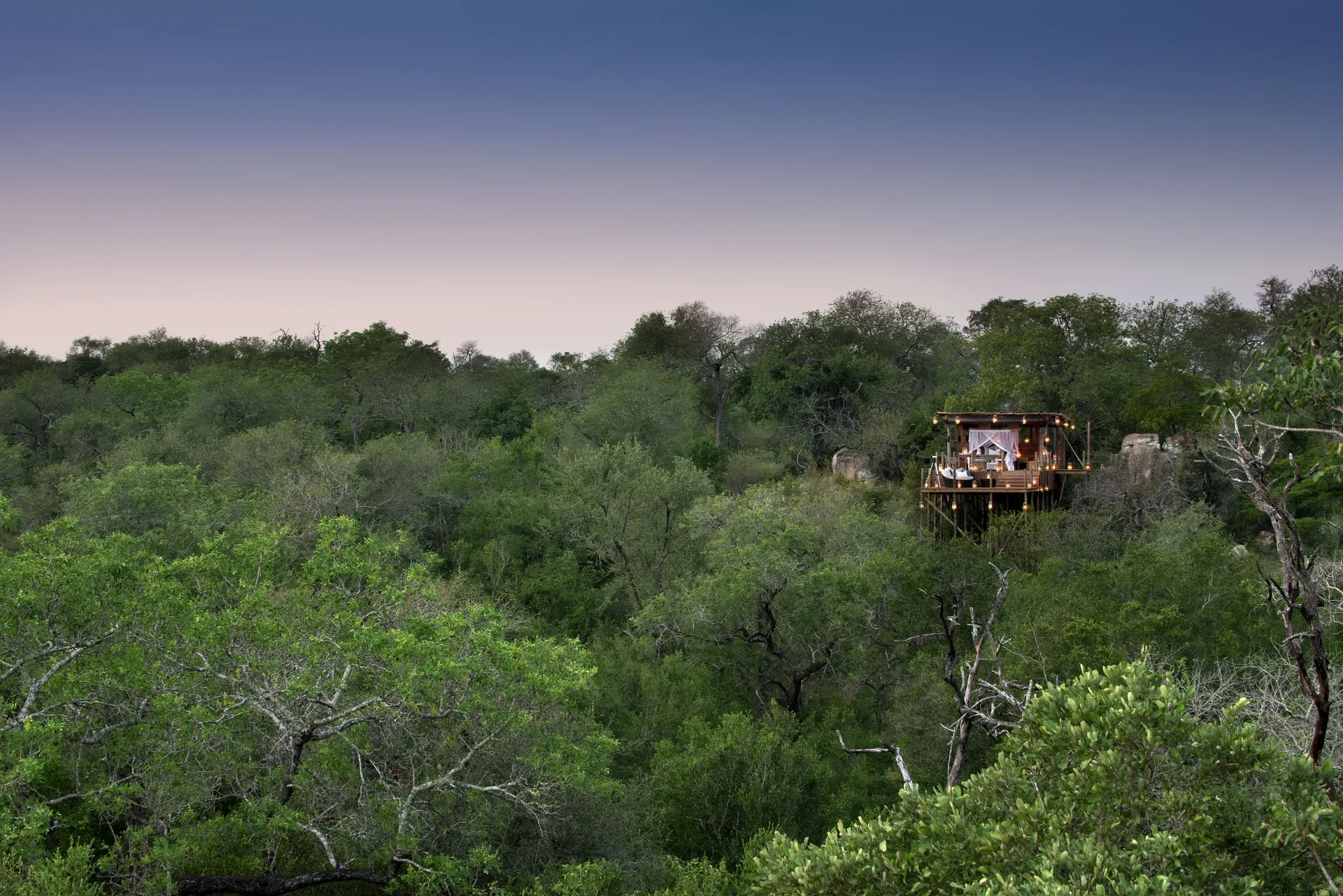
Sleeping in a Treehouse on Safari at Lion Sands

March 31, 2026
A private treehouse sleep-out under the stars in the wild.
Yes - you can sleep in a treehouse on safari at Lion Sands Game Reserve. The experience places you on an open platform above the bush for the night, combining full exposure to the environment with structured safety and comfort.
It forms part of a broader stay, where game drives, lodge experiences and wildlife encounters shape the overall safari. If you’re deciding how this experience fits into your stay, see Lion Sands Game Reserve: What to Know Before You Book.
It extends the safari beyond traditional game drives into the hours most guests never spend in the bush. Three treehouses - Chalkley, Kingston, and Tinyeleti - offer different settings across the reserve. For a closer look at their layout and setting, you can explore more about the Lion Sands treehouses.
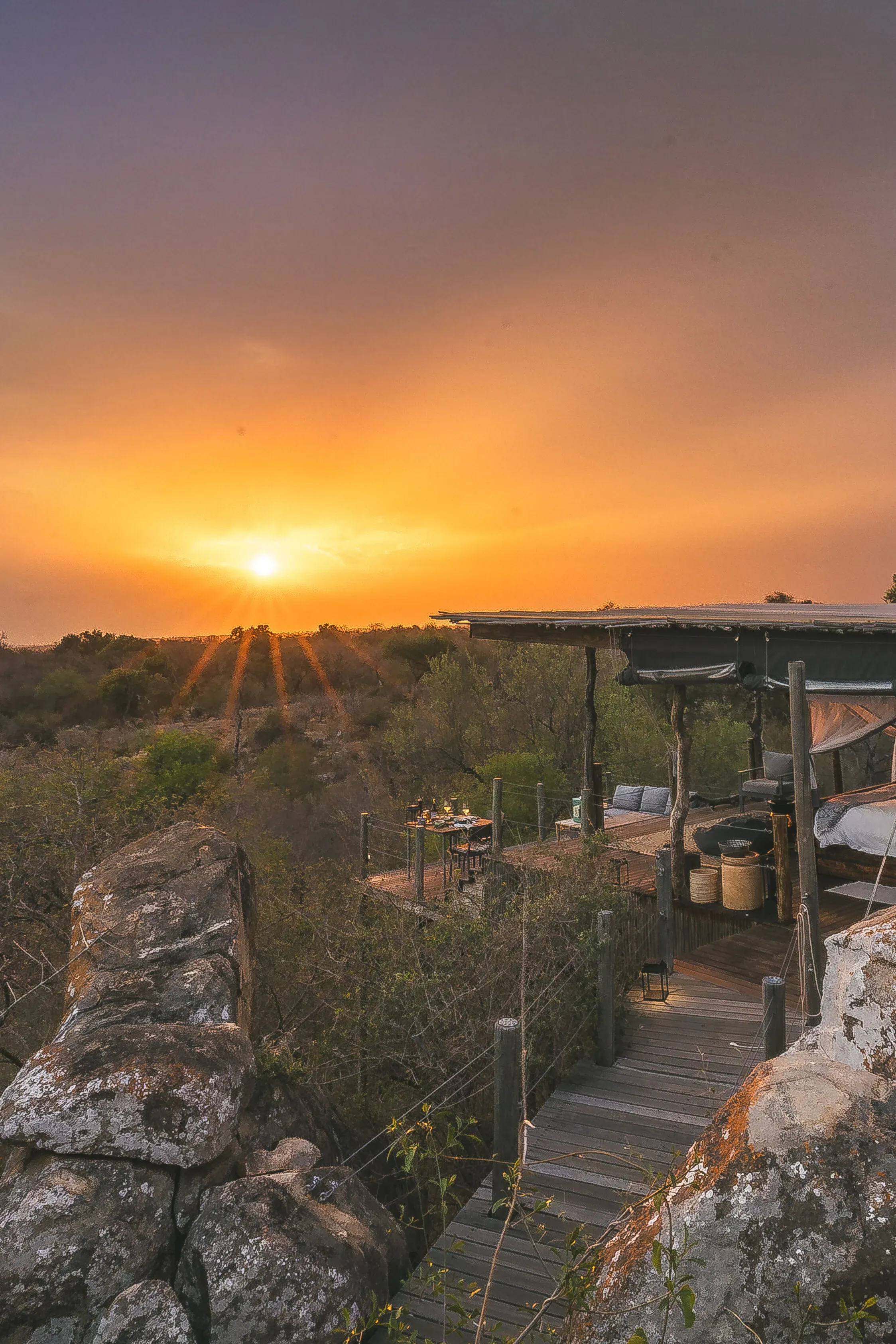
Is it safe to sleep in an open treehouse in the bush?
This is the first question most people ask, and it deserves a straight answer. Yes, it’s safe to sleep in an open treehouse in the bush – with specific measures in place. The platforms sit between 26 - 33 feet (8 - 10 metres) above the ground, which puts them comfortably beyond the reach of whatever moves below. Each treehouse has a locked door or drawbridge that seals off the stairway from below. Two-way radio contact connects you to your field guide throughout the night, should you need assistance or wish to return to the lodge. What the safety features do not do is remove you from the bush. Sounds carry at night, and you will hear as animals come and go beneath you. The structures are designed to keep you secure while remaining genuinely open to the environment, which is where the appeal lies. Robert More, CEO and Custodian at MORE Collection, explains: "An outdoor sleep-out safari appeals to all nationalities and all ages, especially those who are looking to get closer to the raw elements of being in the African wilderness under the stars, listening to all the night noises. It’s not for everyone, but for those who do wish to do it, it really speaks to their soul." If at any point you’re uncomfortable, a radio call brings your field guide back, and you can return to your lodge room at any time.
Which treehouse is right for you?
Each treehouse offers a distinct setting - open savannah, elevated canopy, or river view - and the choice comes down to which environment you want to experience overnight.
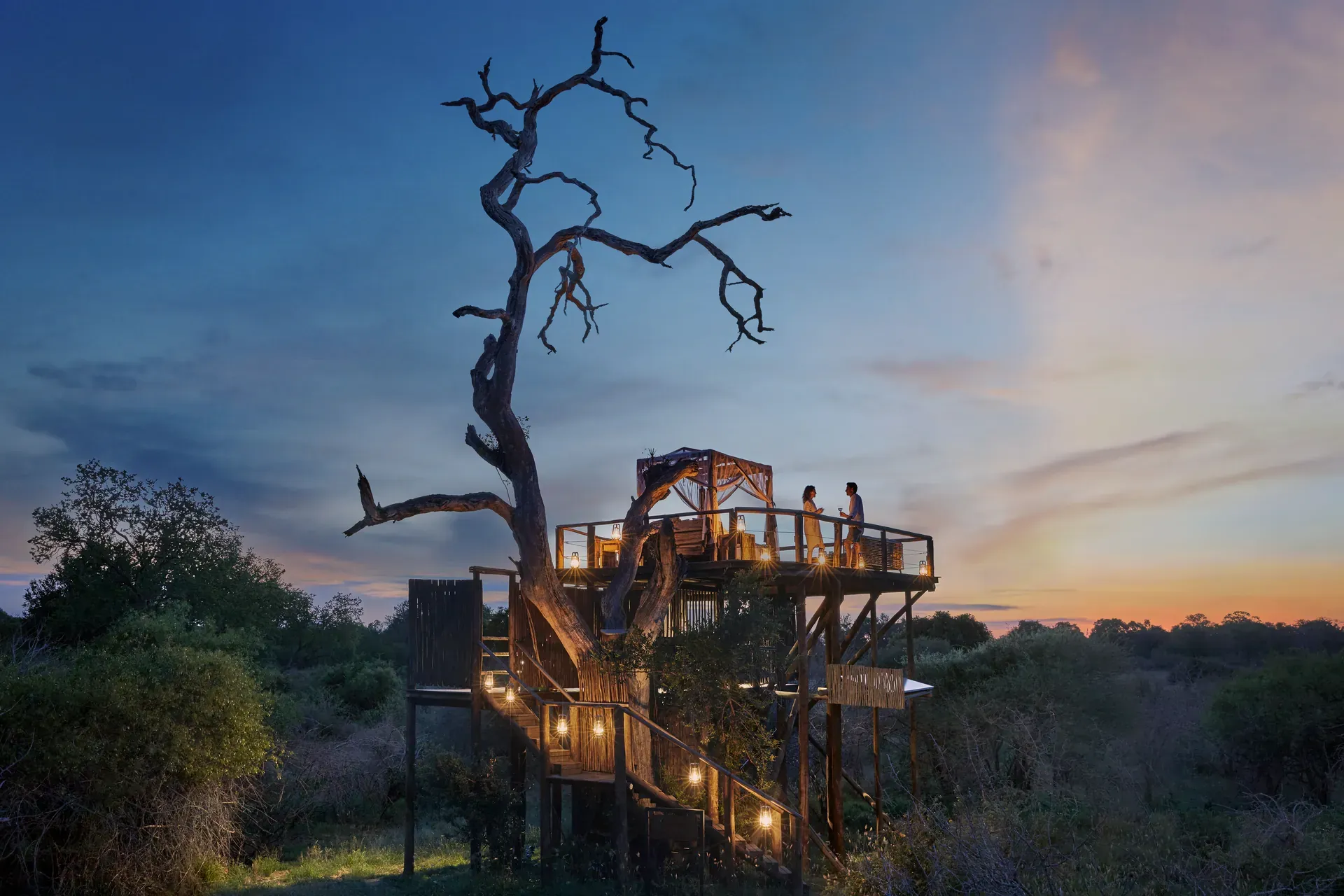
The Savanna Original: Chalkley Treehouse
Chalkley Treehouse is Lion Sands’ original treehouse and the most intimate of the three, designed for just two guests. Set in open savannah with uninterrupted views, it offers the most immersive sleep-out experience. At night, with the lanterns low and the savannah quiet, the sense of exposure is as complete as it gets at Lion Sands - there are no trees between you and the horizon.
At a glance:
- For guests of Ivory Lodge or River Lodge
- 2 guests (1 child aged 10-15 years)
- 40m² deck, 26 feet (8m) above ground
- View: open savannah
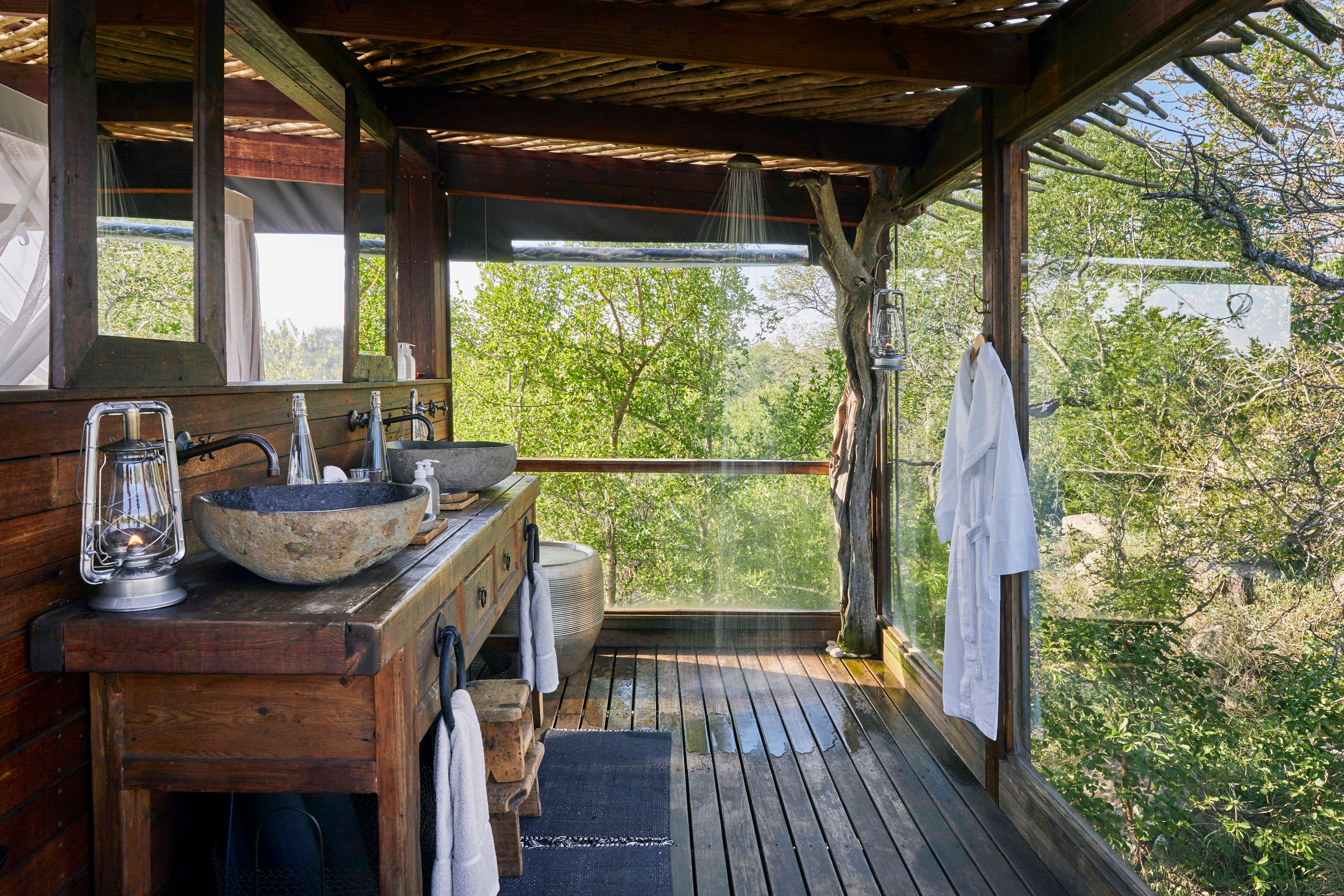
- Full bathroom, including WC, double shower and vanity
- Solar lighting along balustrades
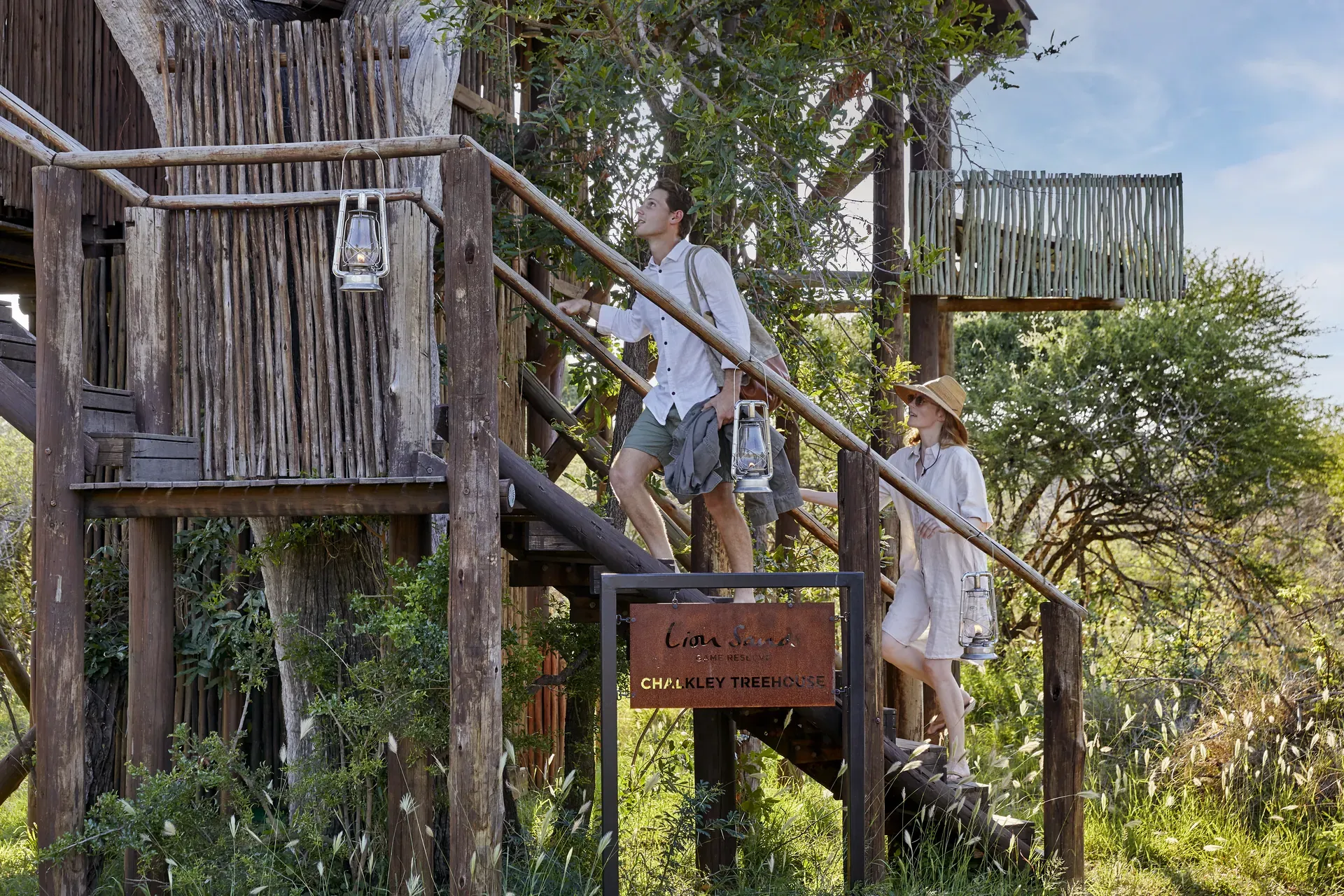
- Locked door with secure stairway
- Two-way radio contact
- Gourmet picnic basket and selected drinks
- Year-round access in good weather
The treehouse was built in 2006 on the exact site where Robert More's grandfather, Guy Aubrey Chalkley, built a timber platform beside a centuries-old leadwood tree in the 1950s. As Robert explains: “The concept of sleeping out on a platform was introduced to us at a young age… The first Lion Sands treehouse was built in the exact same place as the original platform.”
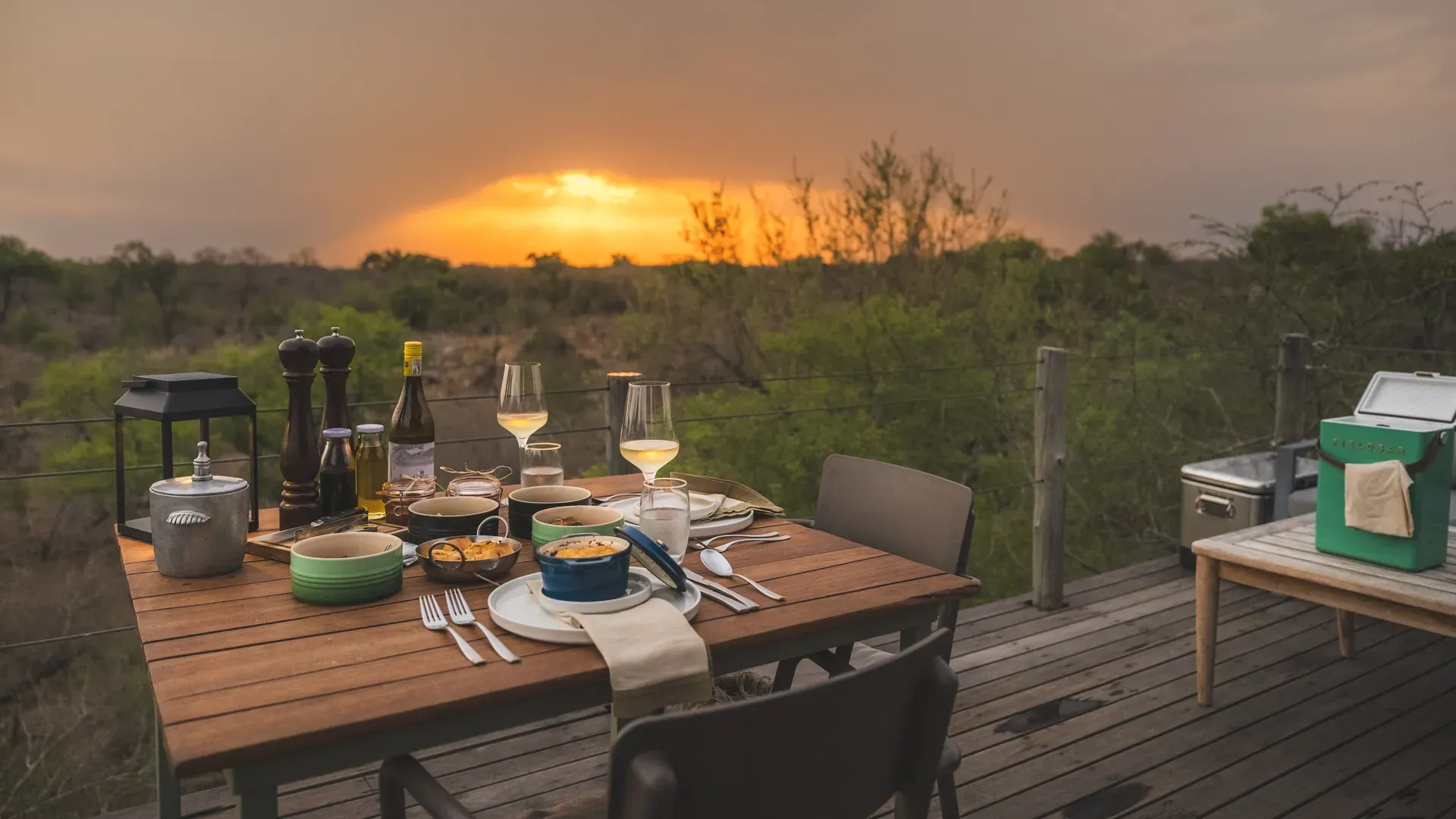
The Treetop Perspective: Kingston Treehouse
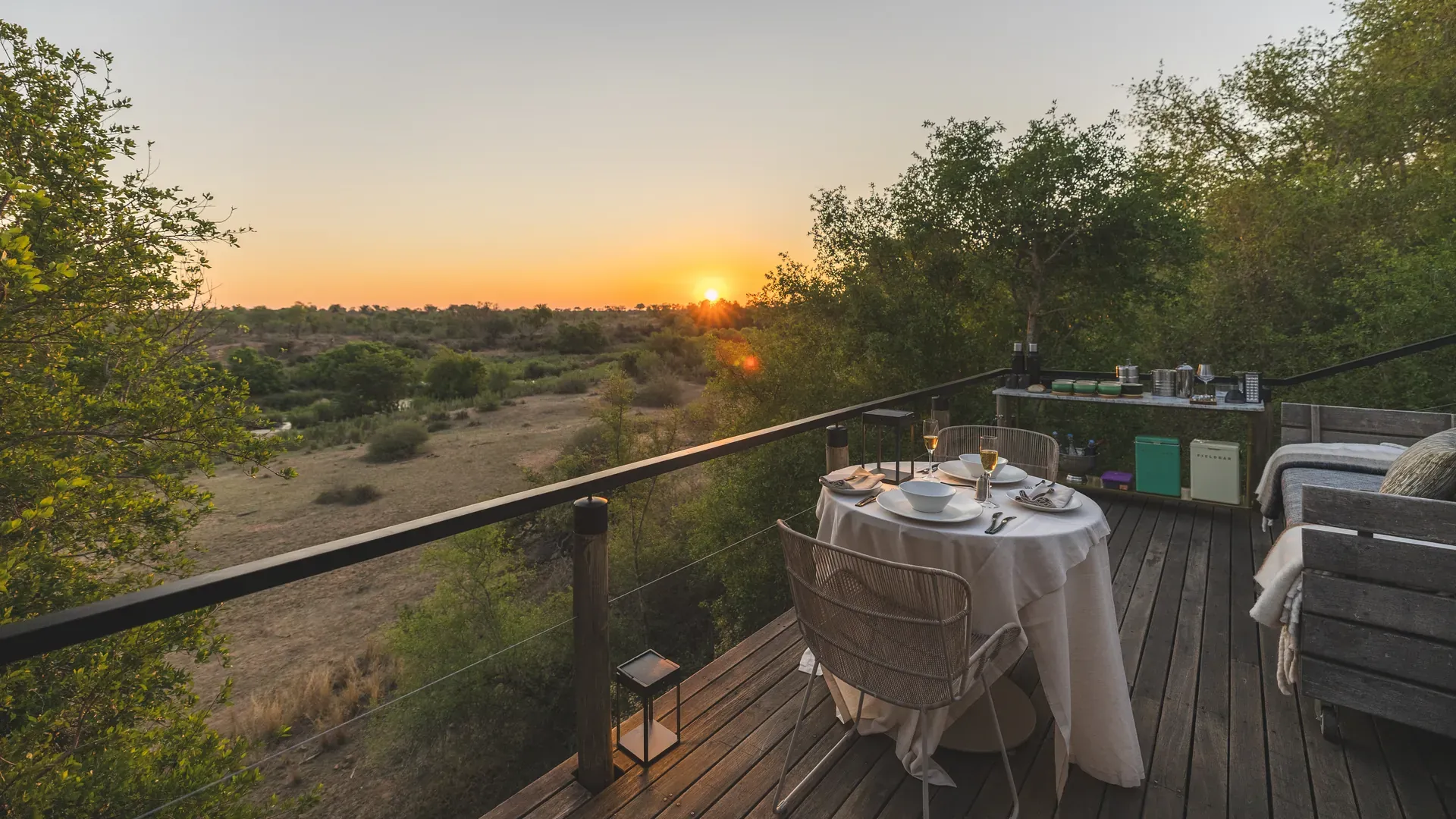
Kingston is positioned above a granite outcrop, giving you a treetop perspective that looks down into the bush. At 10 metres above the ground, it is the highest of the three - but it’s the angle and position that define the experience. Approaching the treehouse past towering boulders and across a drawbridge adds a sense of arrival, but at night the perspective shifts - movement unfolds below you rather than around you.
At a glance:
- For guests of Ivory Lodge or River Lodge
- 2 adults and 2 children (aged 10–15 years)
- 60m² deck, 33 feet (10m) above ground
- View: out over the treetops
- Full bathroom, including WC, rain shower and double vanity
- Solar lighting throughout
- Single door with drawbridge
- Two-way radio contact
- Gourmet picnic basket and selected drinks
- Year-round access in good weather
Named after the farm on which it sits, Kingston Treehouse offers a different way of experiencing the bush - from above rather than within it.
The River Platform: Tinyeleti Treehouse
Tinyeleti sits on the bank of the Sabie River, making it the only treehouse where water defines the entire experience. The river is not a backdrop here - it shapes what you hear, see, and feel throughout the experience. At night, the atmosphere is entirely different from the other treehouses. The constant movement of water underpins everything, with bush sounds carried along the river and animals moving down to drink along the banks.
At a glance:
- For guests of Tinga Lodge or Narina Lodge
- 2 adults and 2 children (aged 10–15 years)
- 50m² deck, 8m above ground
- View: Sabie River
- Full bathroom, including WC, rain shower and double vanity
- Solar lighting throughout
- Double safety door
- Two-way radio contact
- Gourmet picnic basket and selected drinks
- Year-round access in good weather
Tinyeleti, meaning ‘many stars’ in Shangaan, reflects both its setting and the experience - a night shaped by water, sky, and the movement between them.
What is it actually like to sleep in a treehouse on safari?
Sleeping in a treehouse on safari varies - and that unpredictability is part of the appeal. Some nights are full of sound: hyena calling in the distance, the rasp of a leopard - Lion Sands' most iconic predator - movement in the grass below. Other nights are defined by silence - the absence of anything human. What many guests don’t expect is how the experience shifts over time. At first, the mind searches for sound and movement - something to focus on. Then, gradually, that need falls away, and the stillness of the environment takes over. By morning, many guests describe a sense of mental stillness that’s difficult to replicate in everyday life.
How does a Lion Sands treehouse night work?
Guests are transferred to their treehouse by safari vehicle at sunset. The timing matters because this is when the bush changes – the lighting turns warm and fades to dusk, and diurnal animals move off, making way for nocturnal wildlife to emerge.
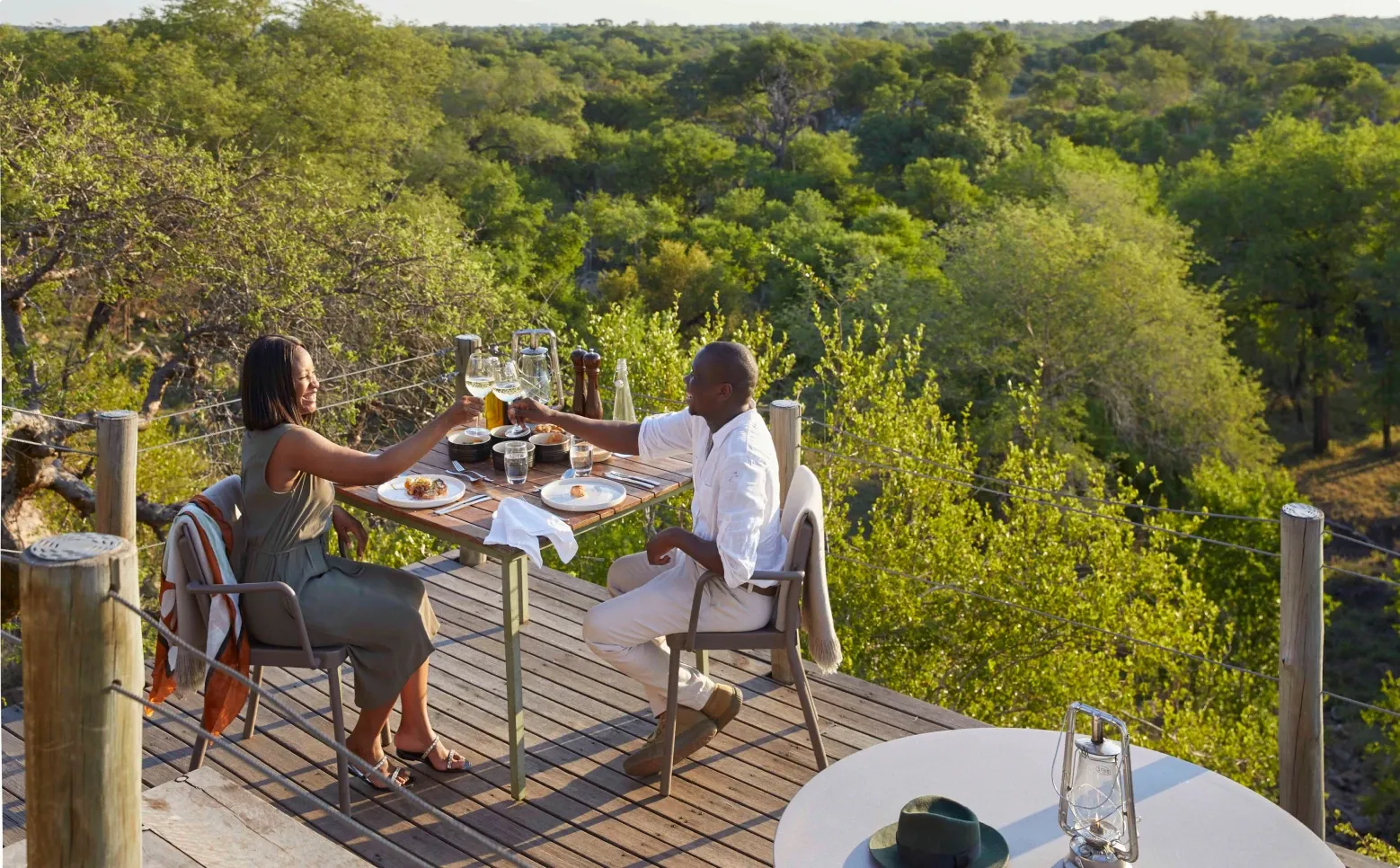
A picnic and drinks are on the platform when you arrive. There's no fixed schedule from that point. There’s no Wi-Fi this far out in the bush, and the wilderness provides plenty of reasons to indulge in the simplicity of being fully “unplugged”. That said, the field guide is a radio call away throughout the night – present enough to be reassuring, absent enough to leave the authentic experience intact.
Meanwhile, your lodge suite remains yours for the full night. If you want to return – at midnight or 3 am – a radio call to your field guide is all it takes. Most guests stay until sunrise, though few return earlier if needed – usually only if the weather turns.
Robert describes what occurs when you finally stop waiting for something to happen and let the night settle around you: "Once your mind stops looking for distractions, the connection to stillness begins to take over."
What does a treehouse safari sleep-out add to a Lion Sands stay?
Traditional early-morning and late-afternoon game drives explore the reserve during daylight hours, when animals are most active and visible. The treehouse covers the hours in between and after: the middle of the night, the early hours before dawn, the part of the bush that most guests on a standard safari schedule never encounter at close range. It’s a different kind of access, and for guests who want it, it changes what a Lion Sands stay means.
Is a Lion Sands treehouse sleep-out worth it?
It’s not a conventional indoor experience, but for guests drawn to being fully present in the environment, it often becomes the most memorable part of a Lion Sands stay. It’s less about what you see, and more about what you experience when the bush is at its quietest.
The Lion Sands treehouses are available as an add-on to stays at Ivory Lodge, River Lodge, Tinga Lodge and Narina Lodge, with your room remaining available throughout. The treehouse experience is available year-round in good weather conditions. For more information, see our guide on when to visit Lion Sands.
To plan your safari and include a treehouse experience, speak to MORE Collection Journeys.