

Sabie River Safari: How the River Shapes Wildlife at Lion Sands Game Reserve

April 3, 2026
A consistent source of wildlife movement, concentration, and sightings throughout the year.
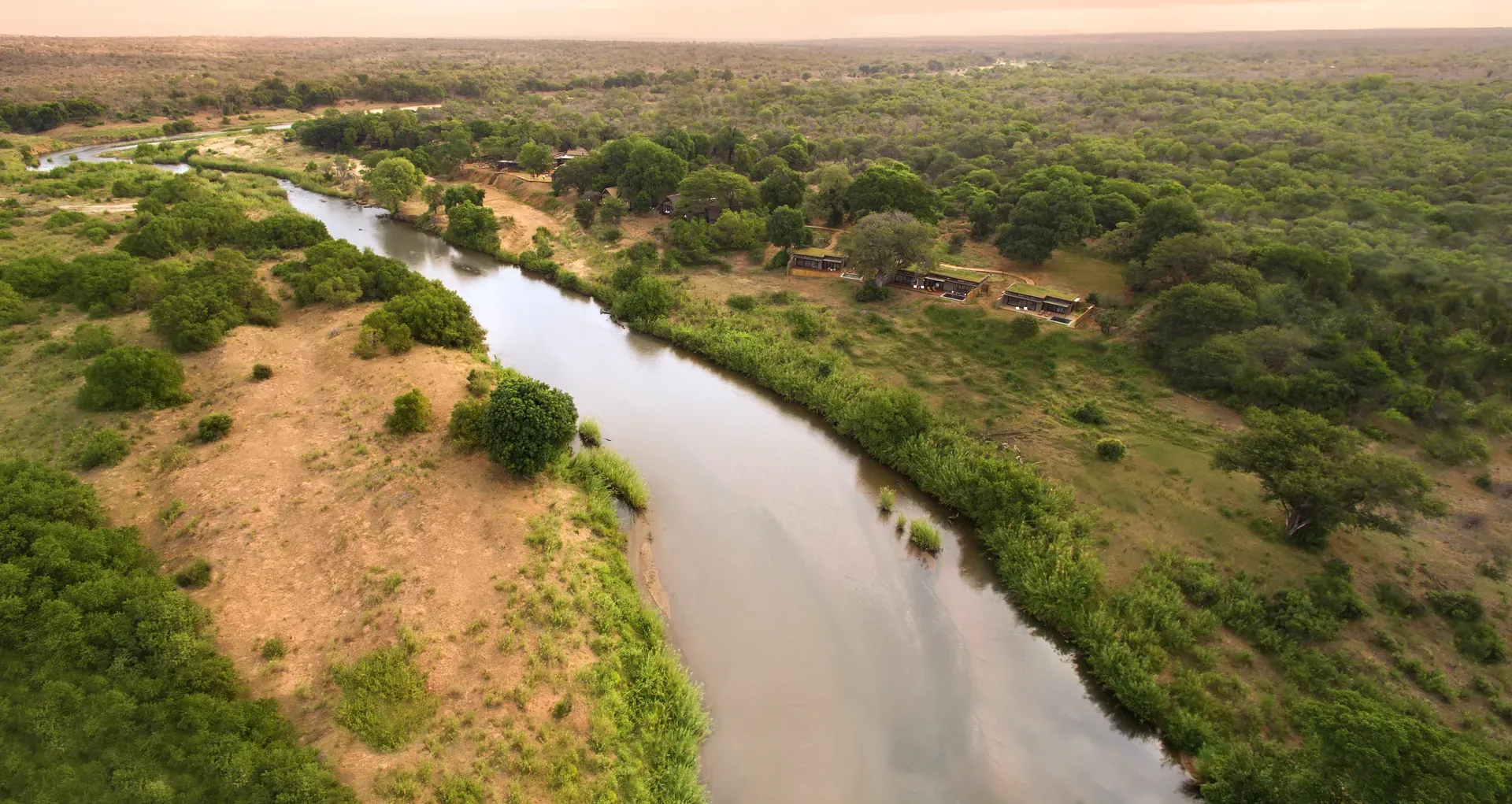
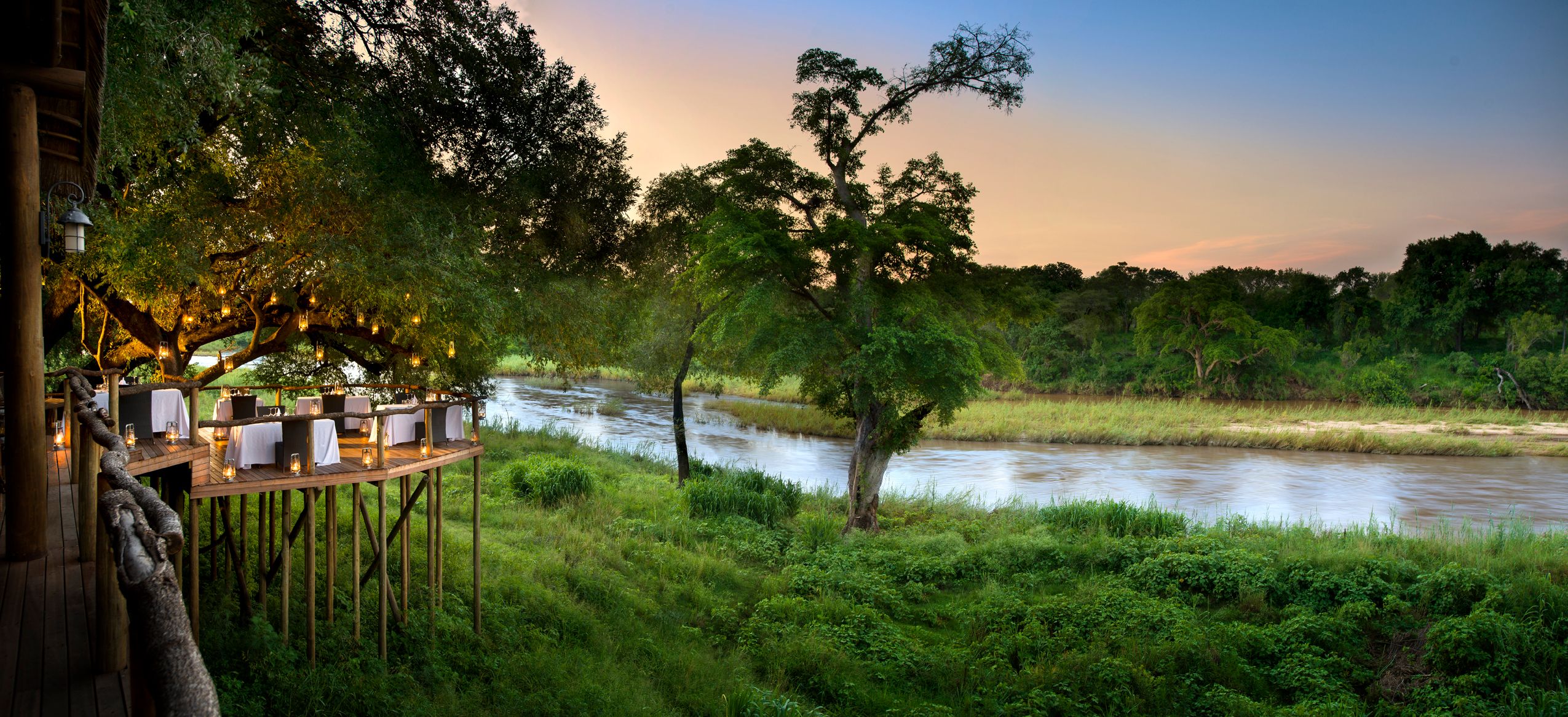
The Sabie River shapes wildlife movement at Lion Sands Game Reserve by concentrating water, vegetation, and prey species along its banks - particularly in the dry season. The reserve sits between the Sabie and the Sand Rivers, but it is the Sabie River - with its permanent flow - that creates a consistent wildlife corridor where herbivores gather and predators follow.
Most guests arrive knowing what they hope to see. Fewer arrive with an understanding of why they're likely to see it - something explored more broadly in our guide to Lion Sands Game Reserve: What to Know Before You Book.
The answer starts with the Sabie River system, which shapes where animals are, when they move, and why predators position themselves where they do.
Why does water determine where wildlife goes?
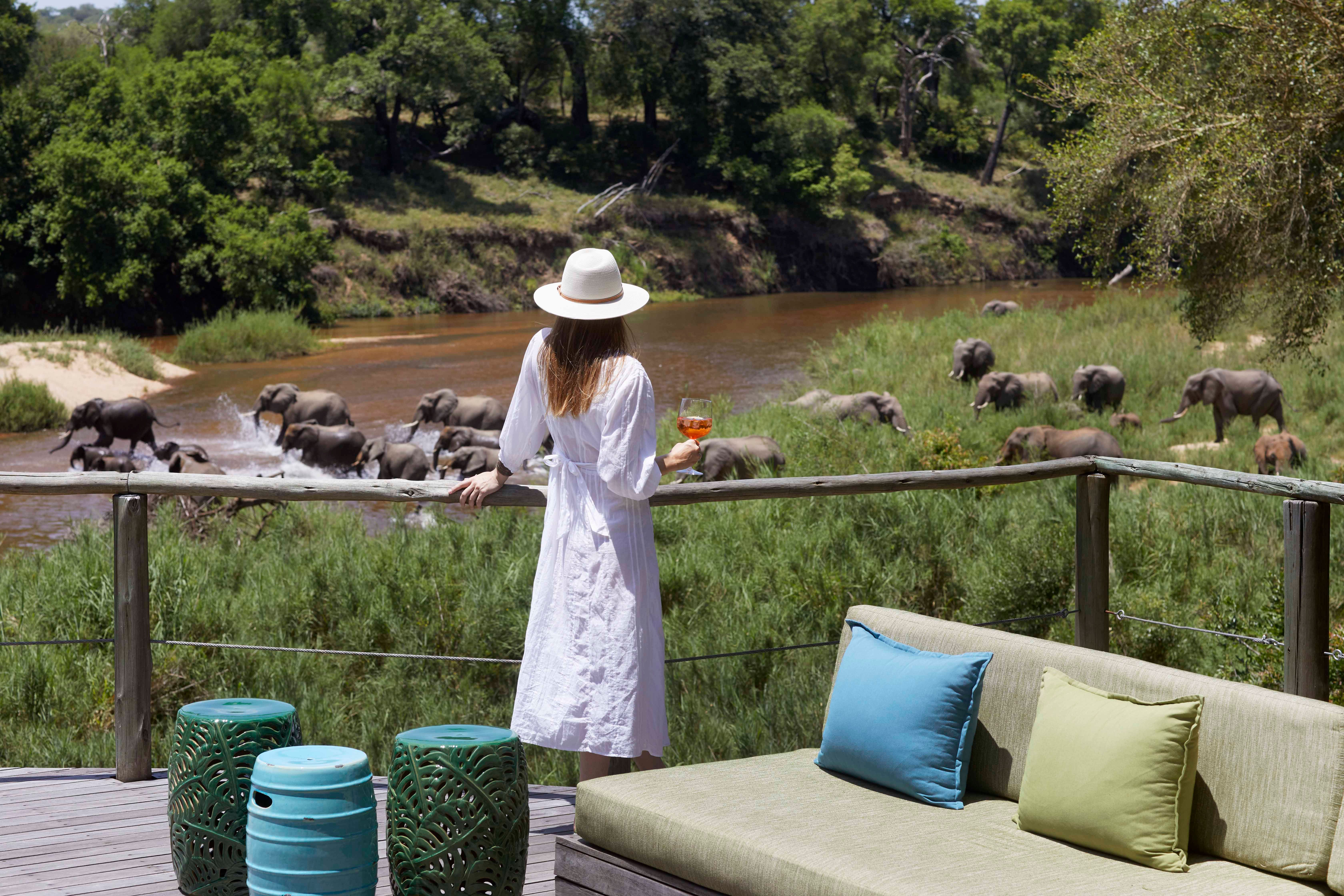
The Sabie River is a wide, perennial river that flows year-round. In environments where rainfall is seasonal and water availability fluctuates throughout the year, permanent water becomes a fixed point around which animal behaviour organises itself.
Prey species need to visit the river frequently to drink, and they structure their daily movements around reliable access to it. The dense thickets, reedbeds, and fig trees that grow along the banks of the Sabie River provide shade, shelter, and food. Over time, the river becomes more than a water source - it becomes a primary habitat corridor.
Why is prey concentrated along the Sabie River?
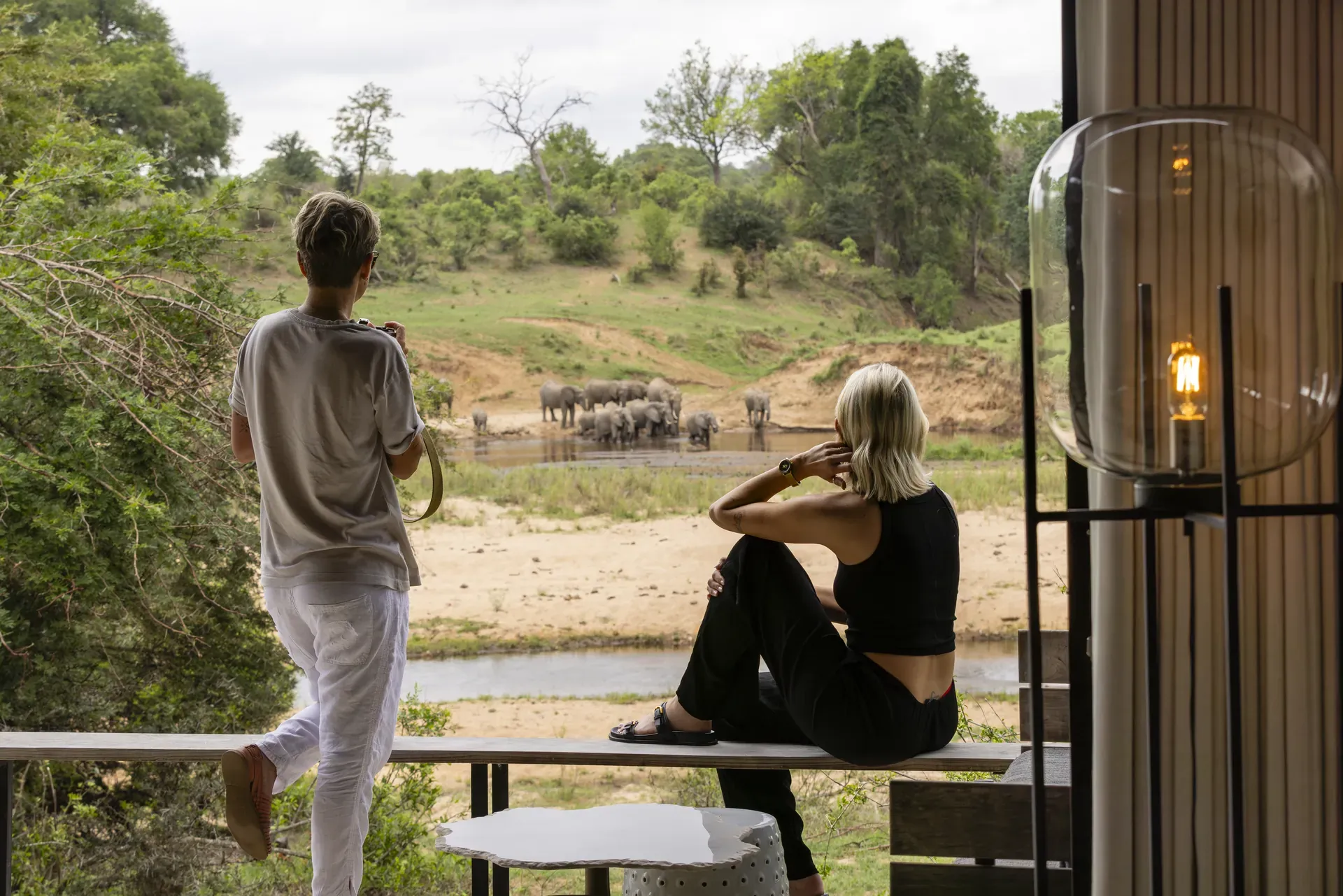
Riaan Fourie, Head of Safari Operations at MORE Collection, explains: “The reedbeds and riverine thickets along the Sabie are prime habitat for small and medium-sized antelope like bushbuck, nyala and common duiker.”
These species favour dense vegetation for protection and feeding - they are not open-plains animals. This keeps them close to the river corridor even under predator pressure. The result is a layered system of prey species, each with different but overlapping reasons to remain along the Sabie River.
What’s less obvious is that this activity is not random - it’s structured around a system that repeats itself along the river.
Why do predators follow the Sabie River?
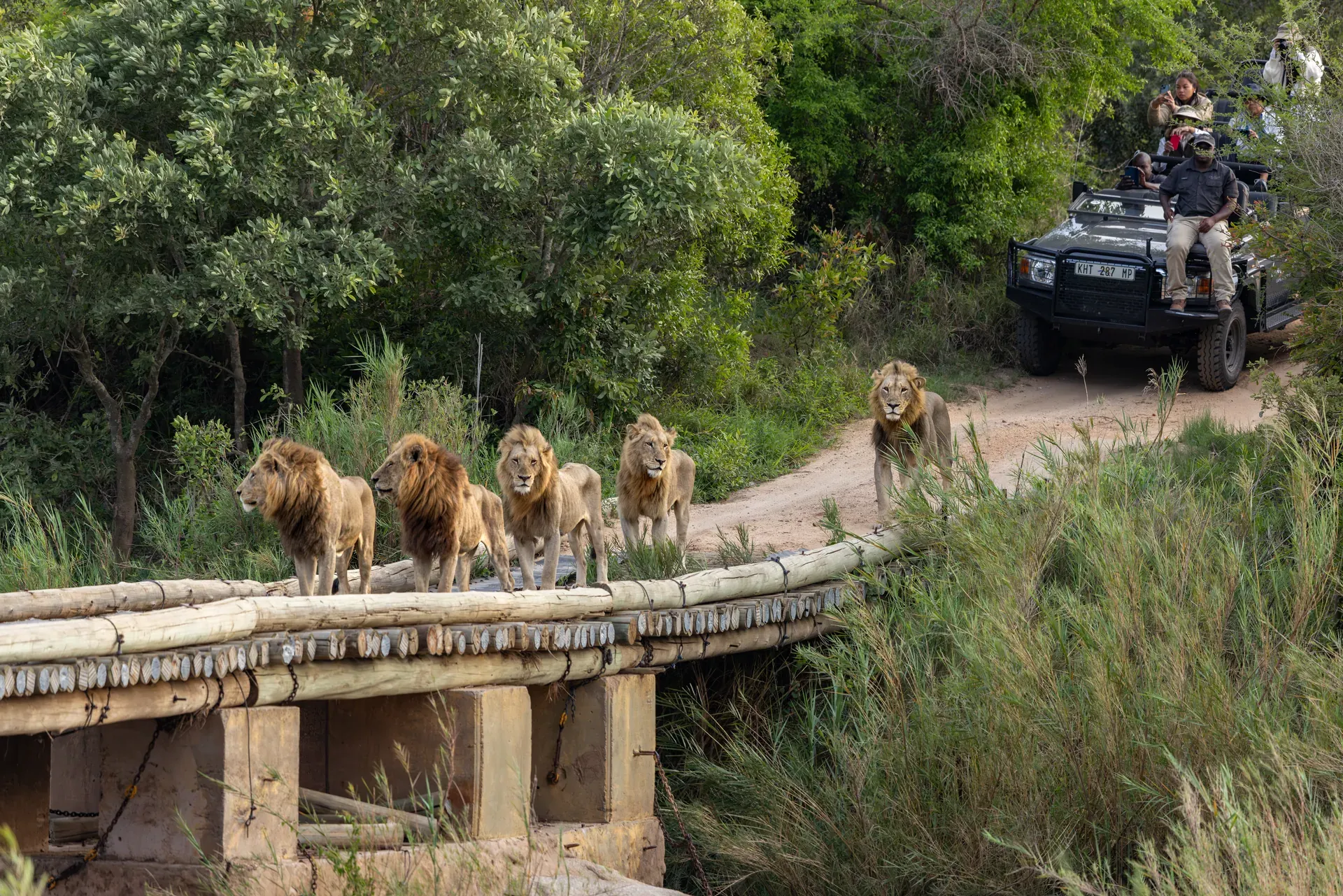
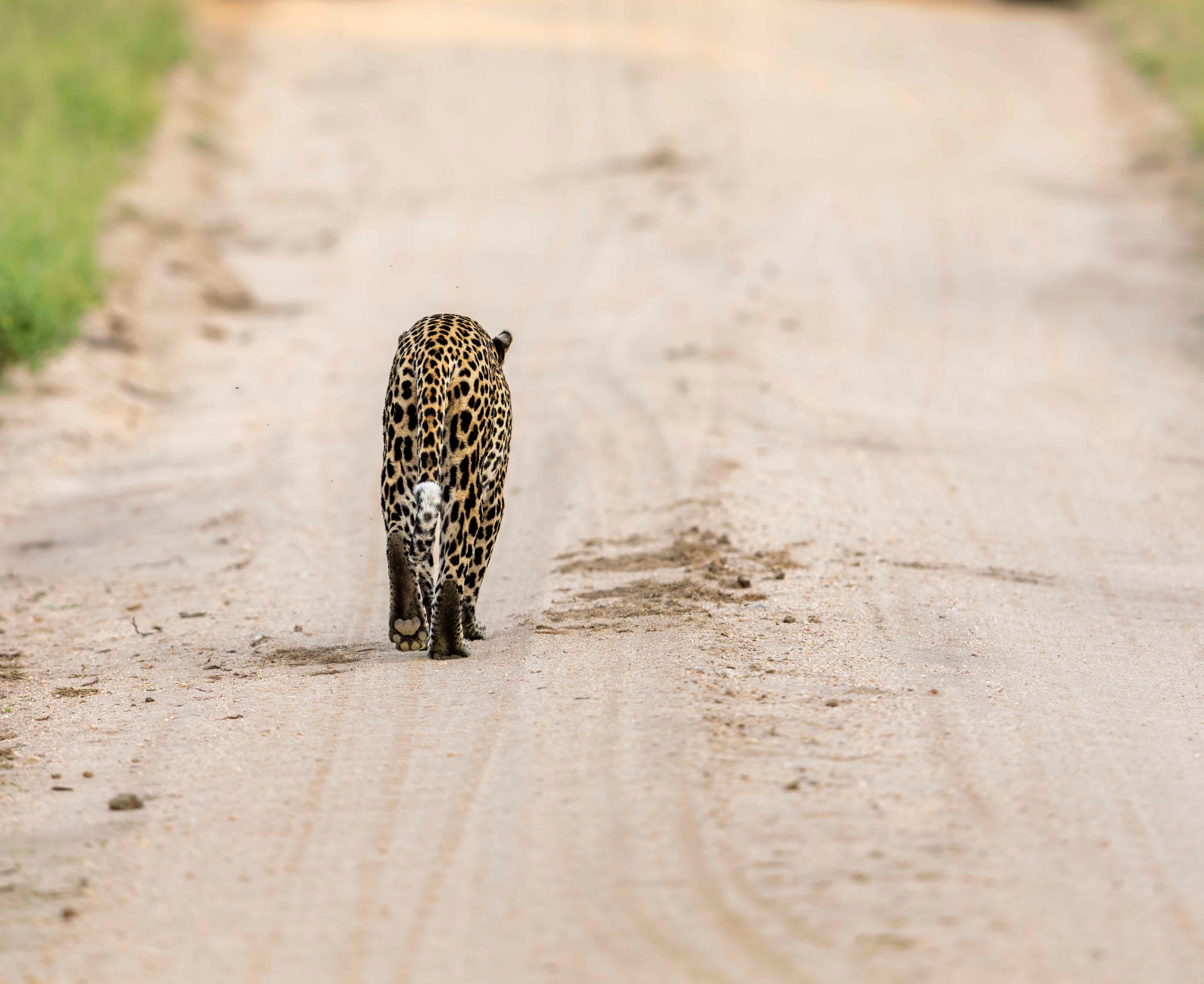
Because prey remains consistently concentrated along the river, predator territories naturally form around this corridor. In the Sabi Sand, leopard territories are closely tied to the riverine thickets that line the banks, where dense vegetation offers both cover for ambush hunting and a reliable supply of prey. This is not incidental - it reflects a consistent pattern of predator behaviour anchored to the river.
This is one of the key reasons leopard sightings are so consistent at Lion Sands - a pattern explored in more detail in Why leopard sightings are so strong at Lion Sands Game Reserve.
Do different seasons change sightings along the river?
Yes - seasons change how wildlife uses the river, but both offer strong sightings.
In the dry season, the Sabie River becomes the most reliable water source in the area. Wildlife concentrates along its banks, and predator activity increases as prey density rises. Vegetation thins, improving visibility.
As Riaan explains: “In dry years, especially, the Sabie River becomes the only reliable water source in the region. General game concentrates along the riverbanks, and their predators follow.”
In the green season, the dynamic changes. Rainfall disperses animals more widely across the reserve, because there's less pressure to stay near the river. Although sightings become more restricted by lush vegetation, newborn prey species appear in greater numbers, predator activity around them intensifies, and the reserve's full range of habitats becomes active.
How does the Sabie River affect game drives at Lion Sands?
The Sabie River directly influences how game drives are structured. In the dry season, movement becomes more predictable as animals concentrate along the river, often resulting in high-density sightings in these areas. In the green season, wildlife disperses across the reserve as water becomes more widely available, leading to more varied but less concentrated sightings.
Do game drives intentionally follow the river?
Yes - but not exclusively.
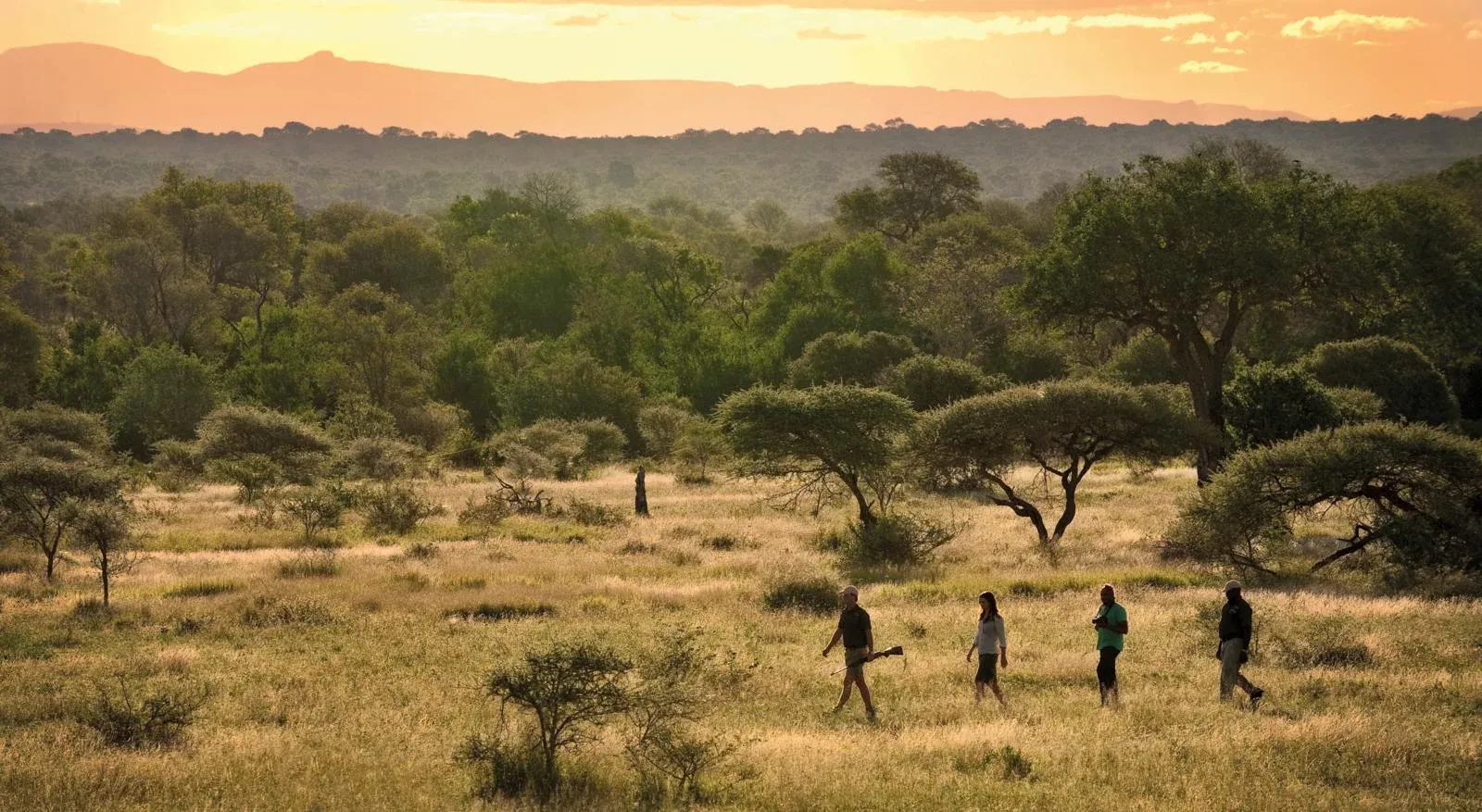
While the Sabie River is a key focus area, guides and trackers adapt their approach based on fresh tracks, known territory patterns and animal behaviour. Animals move to and from the river throughout the day, meaning sightings often occur along these movement routes rather than only at the water itself.
Where and when is river activity highest?
Activity along the Sabie River follows a consistent daily pattern:
- Early morning and late afternoon: peak movement as predators and prey move to and from the river
- Midday: predators typically rest in shade while larger species remain near water
- Cooler weather: activity can extend into the middle of the day
Why is permanent water so important for wildlife?
Permanent water is critical in environments where rainfall is seasonal. As conditions become harsher, animals adjust their movement to remain within reach of reliable water sources like the Sabie River. This shapes territory size, movement patterns and energy use - meaning animals are not simply arriving at the river, but constantly positioning themselves in relation to it.
Why does Lion Sands have such consistent river sightings?
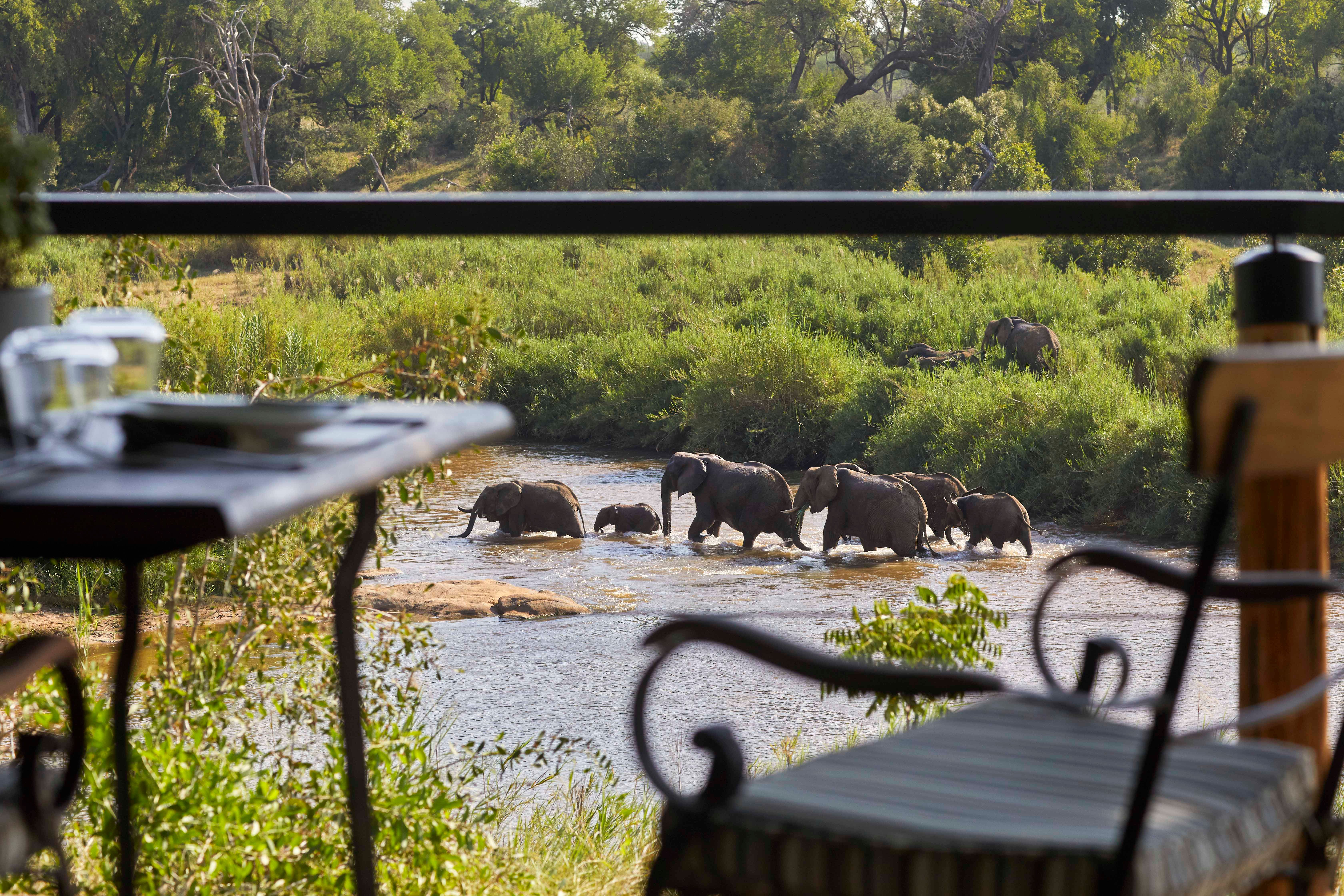
Lion Sands holds 10.5 kilometres of exclusive frontage along the Sabie River, with all four lodges positioned directly on its banks. Because this stretch of river is not shared with multiple lodges, field guides are able to position vehicles based on animal behaviour rather than competition for access.
This allows sightings to unfold naturally, without pressure to move on - a key factor in the consistency and quality of wildlife viewing along the river.
The reserve also lies between the Sabie and Sand Rivers. In the dry season, the seasonal Sand River recedes and animals that rely on it shift toward the permanent water of the Sabie. This concentrates both prey and predators along the corridor that Lion Sands fronts directly onto - increasing the consistency of sightings over time. This dynamic - a seasonal river receding alongside a permanent one - reinforces the Sabie as the central point of wildlife activity within the reserve.
A Sabie River safari
A Sabie River safari at Lion Sands Game Reserve is not a matter of luck. The river is the system that drives wildlife movement - shaping where animals gather, how predators hunt, and how sightings unfold across the reserve.
The leopard sightings, predator activity, and density of prey along the river are not separate phenomena - they are different expressions of the same underlying system.
To experience how the Sabie River shapes a safari at Lion Sands Game Reserve, speak to MORE Collection Journeys to plan your stay.